





Choosing the right paper is one of the most important decisions when printing a children’s book. Paper affects much more than the appearance of the finished book. It influences color reproduction, readability, page-turning, durability, writing or coloring performance, binding, shipping costs, and the overall experience children have when interacting with the book.
For example, a beautifully illustrated picture book printed on thin, lightweight paper may suffer from excessive show-through, while a coloring book printed on coated glossy paper may not work well with crayons or colored pencils. A board book for toddlers needs an entirely different paper and construction from a chapter book intended for children who are already reading independently.
With more than 30 years of experience in book printing, BookPrintingChina understands that there is no single “best” paper for every children’s book. The ideal paper depends on the book’s genre, age group, artwork, page count, binding method, intended use, budget, and desired durability.
In this guide, we will explore the most popular paper types used for children’s book printing, explain paper weight and thickness, discuss cover and interior paper options, and provide practical advice to help you choose the right paper for your project.
Why Paper Matters in Children’s Book Printing

Children’s books are often handled much more frequently—and sometimes much more enthusiastically—than books for adults. Young readers may turn pages repeatedly, carry books around, place them in bags, color on them, or accidentally bend, fold, or spill something on them.
As a result, paper selection needs to balance appearance, performance, durability, and cost.
Paper affects image quality
Many children’s books depend heavily on illustrations. Picture books, graphic novels, and educational books often contain colorful artwork that needs to look sharp and vibrant.
Coated papers generally provide a smoother printing surface, allowing ink to sit more evenly on the paper. This can produce crisp details, rich colors, and smooth areas of solid color. Glossy coated paper tends to make colors appear especially bright and saturated, while matte coated paper provides a softer appearance with less glare.
Uncoated paper has a more natural surface. It may not reproduce colors with quite the same visual intensity as coated art paper, but it often provides a warm, tactile reading experience that works particularly well for novels, chapter books, workbooks, and educational publications.
Paper affects readability
Children’s books are frequently read under different lighting conditions. Glossy paper can reflect light, particularly when a child is reading near a window or under a bright lamp. Matte paper reduces glare and is therefore often preferable when illustrations need to be viewed comfortably for longer periods.
For text-heavy books, uncoated paper can also be a good choice because its less reflective surface creates a familiar, comfortable reading experience.
Paper affects durability
The paper used for a toddler’s board book needs to withstand significantly more physical handling than the paper used for a children’s novel.
A higher paper weight can provide greater stiffness, but GSM alone does not determine durability. Paper construction, coating, lamination, binding, paper thickness, and manufacturing quality all contribute to how well a book withstands use.
For books intended for very young children, board book construction, rounded corners, protective coatings, and strong binding may be more important than simply selecting the heaviest paper.
Paper affects the book’s weight
A heavier paper generally adds weight to the finished book. This is important for children’s books because a very thick or heavy book may be difficult for a young child to hold.
It also affects shipping costs, particularly when printing large quantities internationally.
For this reason, choosing the thickest available paper is not necessarily the best solution. The goal is to select a paper that provides enough stiffness and opacity for the intended application without adding unnecessary weight.
Paper affects production cost
Paper is one of the major components of children’s book printing costs. Heavier specialty papers, textured papers, and premium materials can increase the unit cost.
A 32-page picture book printed on 157gsm matte art paper, for example, may have a very different production cost from the same book printed on 200gsm matte art paper.
The best approach is to balance the desired appearance and performance with the book’s target retail price and production budget.
Paper affects the overall reading experience
Children’s books are physical products. The feel of the paper can contribute to how a book is perceived.
A smooth matte page can give a picture book a premium contemporary feel. Natural uncoated paper can create a warm, traditional reading experience. Linen or textured paper can make a special-edition children’s book feel distinctive.
In other words, paper is not simply a technical specification. It is part of the book’s design.
Popular Paper Types Used for Children’s Book Printing
There are many paper grades available for commercial book printing, but several types are particularly common for children’s books.


Coated Paper
Coated art paper has a smooth coating applied to the paper surface. This creates an even printing surface that is well suited to detailed illustrations and full-color images.
Two of the most common finishes are glossy art paper and matte art paper.
Glossy art paper
Glossy paper has a shiny surface that can make colors appear vivid and photographs or illustrations look highly saturated.
It is often suitable for:
Picture books
Children’s photo books
Illustration-heavy books
Educational books with colorful diagrams
The main disadvantage is glare. Under strong lighting, glossy pages can reflect light and make text or illustrations harder to view.
Matte art paper
Matte art paper has a smooth but non-glossy finish. It can still provide excellent color reproduction while reducing reflections.
It is often a strong choice for:
Illustrated storybooks
Educational children’s books
Premium children’s books
For publishers who want a premium appearance without the strong reflections of glossy paper, matte art paper is often one of the most versatile options.
Uncoated Paper
Uncoated paper does not have the smooth coating found on art paper. It has a more natural texture and is generally easier to write or draw on.
Common applications include:
Children’s novels
Early readers
Chapter books
Educational books
Uncoated paper is especially useful when readers are expected to write directly on the pages.
For example, a workbook printed on coated glossy paper may look attractive, but pencils or certain pens may not perform as well on its surface. An appropriate uncoated paper can provide a much better writing experience.
Uncoated paper can also give a children’s storybook a softer, more traditional appearance. Its natural texture may complement books with hand-drawn illustrations, watercolor-style artwork, or a deliberately organic visual style.
Coated One Side (C1S) Paper
C1S stands for Coated One Side. As the name suggests, one side of the paper has a coated surface while the other side remains uncoated.
C1S paper can be useful when one side needs high-quality image reproduction while the other side benefits from a writable or printable natural surface.
It can be considered for:
Cards and inserts
C1S paper is often used in children’s board-book manufacturing processes. Depending on the production method, printed coated sheets may be mounted or laminated to a rigid board structure.
FSC-Certified or Recycled Paper
Environmental considerations are increasingly important to publishers, parents, schools, libraries, and retailers.
FSC-certified paper comes from sources that meet the requirements of the Forest Stewardship Council’s responsible forestry certification system. Recycled paper, meanwhile, incorporates recovered fiber into the paper-making process.
These options can be considered when sustainability is an important part of a children’s book project.
However, environmental certification and paper appearance are separate considerations. A sustainable paper can still have different levels of whiteness, smoothness, opacity, and printability.
If sustainability is a key requirement, tell your printer at the beginning of the project. The printer can help identify suitable certified or recycled paper options that also meet the book’s visual and production requirements.
Specialty Paper
Specialty papers can add a distinctive tactile quality to a children’s book.
Examples include:
Linen-textured paper
Felt-textured paper
Colored paper
Decorative specialty stock
These papers may be particularly suitable for premium editions, keepsake books, or books where tactile interaction is an important part of the design.
However, specialty paper should be selected carefully. Very strong textures can affect small text, fine illustrations, or color consistency.
For a children’s book with intricate artwork, it is often worth requesting a physical paper sample or printed proof before approving the final production material.
Understand Paper Weight and Thickness
Paper specifications can be confusing, especially when printers and suppliers use different measurement systems.
Two important concepts are paper weight and paper thickness.
What is GSM?
GSM stands for grams per square meter.
It indicates how much a square meter of paper weighs. For example, 157gsm paper means that one square meter of that paper weighs 157 grams.
GSM is widely used internationally and is one of the easiest specifications to use when discussing book-printing paper.
Typical examples include:
80gsm
100gsm
105gsm
120gsm
128gsm
140gsm
157gsm
160gsm
180gsm
200gsm
250gsm
300gsm
350gsm
Generally, as GSM increases within the same paper type and paper family, the paper tends to become heavier and often thicker or stiffer.
However, GSM should not be treated as a direct measurement of thickness.
What is LB?
In the United States, paper is also commonly described using pounds or lb.
Paper weight in pounds is based on the weight of a specific number of sheets of a particular standard size. This is known as basis weight.
This is why a direct conversion between GSM and pounds is not always straightforward.
For example, “80 lb” can mean different things depending on whether the paper is categorized as text, cover, or another paper grade. Two papers with the same pound rating may not have the same GSM or thickness.
For international book-printing projects, GSM is often the clearest specification to use because it avoids confusion between different basis-weight systems.
When discussing paper with a printer, it is better to specify the paper type and GSM together, such as “157gsm matte art paper,” rather than simply saying “60 lb paper.”

What is paper thickness?
Paper thickness is typically measured in inches, millimeters (mm), or sometimes points/caliper, depending on the market and supplier.
For example:
0.10 mm = 0.0039 inches
0.15 mm = 0.00591 inches
0.20 mm = 0.00787 inches
The exact thickness of a paper depends on its composition and manufacturing process.
Does higher GSM always mean thicker paper?
No. This is an important distinction.
A higher-GSM paper is heavier per square meter, but it is not automatically thicker than every lower-GSM paper.
Paper density, fiber composition, coating, calendering, and manufacturing processes can all affect thickness.
For example, two papers, such as glossy art paper and matte art paper, could both weigh 80gsm but have slightly different thicknesses. Conversely, a bulkier paper with a lower GSM may sometimes feel thicker than a denser paper with a higher GSM.
Thus, if the physical thickness of a children’s book is important, ask the printer about both GSM and actual thickness.
This is particularly important for:
Board books
Short picture books
Premium children’s books
Books with very thick pages
Books designed for toddlers
Cover Paper Options for Children’s Books

The cover is the first part of the book that readers see and touch. It also has to withstand more handling than the interior pages.
The most common children’s book cover structures are hardcover, softcover, and board book.
Hardcover Children’s Books
A typical hardcover construction can use approximately 157gsm coated cover/wrap paper, which is printed and finished with lamination before being wrapped around rigid greyboard.
The greyboard is commonly around 2–3mm thick, depending on the desired construction and book specifications.
The hardcover can also use alternative wrapping materials, such as:
Cloth
PU leather
Specialty paper
Textured paper
Decorative printed paper
For children’s picture books, a hardcover can provide a premium and durable format suitable for libraries, gift books, collectors’ editions, and books intended to be passed between siblings or generations.
Lamination on the printed wrap can provide additional protection against scuffing and handling. Matte, gloss, and soft-touch finishes can create different visual and tactile effects.
Softcover Children’s Books
Softcover books typically use heavier cover stock than the interior pages.
A common range is approximately 250–350gsm coated cover paper, depending on the book’s size, paper count, and desired stiffness.
The cover may then receive:
Gloss lamination
Matte lamination
Soft-touch lamination
For children’s books, lamination is particularly useful because the cover receives frequent handling.
A glossy laminated cover provides a bright and durable finish, while matte lamination offers a more subdued appearance and reduces reflections. Soft-touch lamination provides a smooth, velvety tactile finish and is often chosen for premium books.
Board Books
Board books are designed primarily for babies, toddlers, and young children who may not yet be able to handle conventional paper pages carefully.
There are several board-book constructions.
Self-cover board books: In a self-cover board-book construction, the cover use the same paper as the interior.
Hardcover board books: A hardcover board book can use approximately 157gsm coated paper as the printed wrapping material. The paper is printed, finished, and then wrapped around rigid 2–3mm greyboard, depending on the required construction.
For toddler books, rounded corners can also be considered to improve handling and reduce sharp edges.
Common Interior Paper Options for Children’s Books

Different children’s book genres have different paper requirements. Below are common starting points for several popular formats.
Novels and General Fiction
Children’s novels and general fiction are primarily text-based, so heavy paper is usually unnecessary.
80gsm uncoated paper is a practical choice for many novels and chapter-based fiction titles.
The benefits include:
Lower book weight
Comfortable page turning
Good readability
Cost efficiency
Suitable thickness for larger page counts
For a long novel, using very heavy paper can make the finished book unnecessarily thick and expensive to ship.
Uncoated paper is also appropriate for books where the reading experience is more important than highly saturated image reproduction.
Early Readers and Chapter Books
Early readers occupy a middle ground between text-heavy books and picture books.
For primarily text-based early readers and chapter books, 80–100gsm uncoated paper is often appropriate.
For highly illustrated early readers, 128–157gsm matte art paper can provide stronger image reproduction and a more substantial page feel.
The choice depends largely on the artwork-to-text ratio.
If illustrations occupy only occasional pages, uncoated paper may be more economical. If almost every spread contains full-color illustrations, matte art paper may provide a better visual result.
Children’s Picture Books
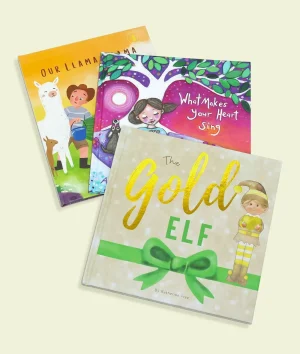
For children’s picture books, 128gsm and 157gsm coated art paper are among the most common choices.
Both glossy and matte finishes can work well.
128gsm: 128gsm is relatively lightweight and can help keep the book’s total weight and production cost under control.
157gsm: 157gsm provides a useful balance between print quality, page stiffness, opacity, durability and cost. For this reason, 157gsm is one of the most popular choices for children’s picture book printing. It provides enough substance to give pages a more premium feel while remaining practical for standard bookbinding and shipping.
What if the picture book has fewer than 32 pages?
For a very short picture book, especially one with a low page count, 200gsm paper can be considered when the goal is to create a more substantial and durable page feel.
Heavier paper can reduce the impression of flimsy pages and provide better stiffness for short books where each page needs to feel more substantial.
However, 200gsm is not automatically better. It increases material cost and book weight.
The appropriate choice should be evaluated together with page count, trim size, binding method, and budget.
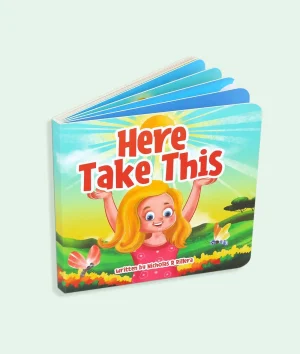
Children’s Board Books
Board books require a different construction from conventional paper books.
A common approach is to use two or multiple sheets of printed and laminated 250–350gsm C1S paper mounted together to create a rigid board structure.
C1S paper can be useful because the coated side provides a smooth surface for colorful illustrations and uncoated side for better adhesion.
The final thickness of a board-book page comes primarily from the rigid board construction rather than the paper GSM alone.
Workbook or Textbook
Children’s workbooks and textbooks often require a practical balance between printability, writing performance, and cost. 80–120gsm uncoated paper is a common range.
For workbooks that require children to write, draw, circle answers, or complete exercises, uncoated paper is generally preferable because its surface is more suitable for many common writing instruments.
For textbooks containing large amounts of color artwork, diagrams, or photographs, a coated paper may also be considered.
The final selection should depend on whether the book is primarily designed to be read, written in, or both.
Coloring Books
Coloring books require special attention because the paper needs to interact well with coloring materials.
A practical starting range is approximately 120–160gsm uncoated paper.
The thicker stock can help reduce show-through compared with very lightweight paper, particularly when children use markers or other coloring tools.
However, paper choice should also consider the intended coloring medium.
For crayons and colored pencils, a suitable uncoated surface can provide the friction needed for comfortable coloring.
For markers, greater thickness and opacity are useful, but even relatively thick paper may allow some ink to show through depending on the marker type.
If the coloring book is specifically designed for heavy marker use, consider testing the actual paper with representative coloring tools before mass production.
Graphic Novels and Comic Books
Graphic novels and comic books depend heavily on visual presentation.
128–157gsm glossy or matte art paper can provide excellent reproduction of colorful artwork, linework, gradients, and detailed illustrations.
Glossy paper can make colors look especially vivid, while matte art paper offers reduced glare and a softer premium appearance.
For black-and-white graphic novels, an uncoated paper can also be considered when a more traditional book feel is desired.
The best choice depends on the artist’s visual style and the intended reading experience.
Considerations When Choosing Paper for Printing Children’s Books

Paper selection should never be made based solely on GSM. Consider the entire book as a product.
Target Audience
The age of the reader is one of the first things to consider.
A book for babies and toddlers has very different requirements from a book for 8–12-year-old independent readers.
For younger children, focus on:
Durability
Easy handling
Stiffness
Safe and comfortable construction
Resistance to frequent handling
For older children, readability, weight, writing performance, and image quality may become more important.
Intended Use
Ask what children will actually do with the book.
Is it primarily for reading?
Is it a bedtime story?
Will children color in it?
Will they write answers?
Will it be used in classrooms?
Will it be carried in a school backpack?
Will it be handled by toddlers?
The intended use directly affects paper selection.
A coloring book needs a different surface from a bedtime storybook. A classroom workbook has different requirements from a collectible picture book.
Page Count
Page count is another important consideration.
A 200gsm coated paper might feel excellent in a 16-page picture book but become unnecessarily heavy in a 100-page book.
Conversely, 80gsm uncoated paper can be perfectly suitable for a long children’s novel but may feel too thin for a short, illustration-heavy picture book.
Page count also interacts with binding. Paper thickness affects the finished spine width and therefore needs to be considered during cover design.
Binding
The paper must work with the chosen binding method.
Common children’s book binding options include:
Saddle stitching
Perfect binding
Case binding
Board book binding
Wire-O or spiral binding for activity materials
For example, a short picture book with a low page count may be suitable for saddle stitching, while a premium picture book may use case binding.
Paper thickness affects folding, gathering, sewing, glue penetration, and overall binding performance.
Thus, paper selection should be finalized in consultation with the printer rather than treated as an isolated design decision.
Content and Design
Look at the artwork before choosing the paper.
Does the book contain:
Full-page illustrations?
Photographs?
Fine line drawings?
Large areas of solid color?
Small text?
Watercolor-style artwork?
Black-and-white illustrations?
Interactive elements?
Full-color illustrations generally benefit from a smooth printing surface.
A natural, hand-drawn design may look better on uncoated paper.
If the book contains small text over dark backgrounds, paper opacity and print contrast become particularly important.
Durability
Think about how long the book needs to last and how frequently it will be handled.
A library book, classroom book, or toddler board book may need significantly greater durability than a promotional activity booklet.
Durability can be improved through a combination of:
Appropriate paper weight
Suitable paper thickness
Lamination
Strong binding
Rounded corners
Protective coatings
Increasing paper GSM is only one part of the solution.
Budget
Paper selection needs to match the economics of the project.
A premium paper may produce a beautiful result, but if the book is intended for mass-market distribution, the additional cost may not provide enough commercial benefit.
For many children’s picture books, 157gsm matte or glossy art paper offers a practical balance between quality and cost.
For a luxury or collector’s edition, specialty paper may be justified.
The right question is not “What is the most expensive paper available?” but rather “What paper provides the right performance and appearance for this book at its intended price?”
Opacity and Show-Through
Opacity is especially important for children’s books with strong colors, dark illustrations, or printing on both sides of a sheet.
A very thin paper may allow artwork or text from the reverse side to become visible.
This can distract from the illustrations and reduce readability.
For picture books, selecting a suitable paper weight and opacity can significantly improve the appearance of full-color spreads.
Book Weight and Shipping
Children’s books are often sold online and shipped internationally. This makes finished weight an important commercial consideration.
A heavier paper increases the weight of every copy. When thousands of books are shipped, even a small increase in the weight of each book can have a noticeable impact on logistics costs.
If your book will be distributed internationally, discuss the balance between paper quality and shipping weight with your printer.
Environmental Requirements
If your publisher, retailer, school, or customers expect environmentally responsible materials, ask about FSC-certified and recycled paper options.
You should also consider the complete production process rather than focusing only on paper.
Printing inks, coatings, lamination, packaging, and manufacturing practices can all contribute to a book’s overall environmental profile.
Child-Friendly Construction
For books intended for very young children, paper should be considered together with the entire physical construction.
Important factors may include:
Rounded corners
Strong binding
Rigid pages
Durable finishes
Appropriate inks and coatings
Securely attached components
Suitable size and weight
A well-designed toddler book should be physically appropriate for its intended audience, not simply printed on thick paper.
How to Choose Between Glossy and Matte Paper

One of the most common questions from children’s book publishers is whether glossy or matte paper is better.
The answer depends on the desired visual effect.
Choose glossy paper when:
You want bright, saturated colors.
The book contains many photographs.
You want a shiny, high-impact appearance.
The illustrations contain strong color contrasts.
You want the pages to have a smooth, polished appearance.
Choose matte paper when:
You want to reduce glare.
The book will be read under strong lighting.
You prefer a premium, sophisticated appearance.
You want a softer visual presentation.
The book contains both illustrations and substantial amounts of text.
For many modern picture books, matte art paper is an especially versatile option because it combines good color reproduction with comfortable viewing.
Should You Choose the Thickest Paper?
Not necessarily.
It can be tempting to assume that thicker paper automatically means a better children’s book. However, this is not always true.
Very thick paper can:
Increase production costs
Increase shipping weight
Make the book difficult to handle
Increase the finished book thickness
Affect binding
Reduce the number of pages that can fit comfortably in a particular format
The ideal paper is the one that provides the right combination of stiffness, opacity, print quality, durability, and weight.
For example, 157gsm is often an excellent compromise for picture books. Going from 157gsm to 200gsm may make sense for a very short book where extra stiffness is desirable, but it may be unnecessary for a longer picture book.
Why Paper Samples and Proofs Matter
Paper specifications on a screen do not always tell the complete story.
A physical sample allows you to evaluate:
Surface texture
Whiteness
Opacity
Stiffness
Color reproduction
Glare
Tactile quality
Page-turning feel
Writing performance
This is especially useful when choosing between similar paper options.
For example, 128gsm and 157gsm may both appear suitable on paper, but handling physical samples can make the difference much easier to understand.
For high-volume children’s book projects, requesting a proof or sample can be a worthwhile investment before committing to the full production run.
FAQs
What is the best paper for a children's picture book?
For many children’s picture books, 128gsm or 157gsm glossy or matte coated art paper is a strong starting point.
Among these options, 157gsm is particularly popular because it offers a good balance of color reproduction, stiffness, durability, weight, and cost.
For very short books, approximately 200gsm may be considered when a thicker and more substantial page feel is desired.
Is matte or glossy paper better for children's books?
Neither is universally better.
Glossy paper provides vivid colors and a shiny finish but can create glare. Matte paper reduces reflections and provides a softer, more premium appearance.
For illustrated picture books, either can work well depending on the artwork and desired aesthetic.
What GSM is best for a children's book?
There is no universal best GSM.
As a general guide, 80–100gsm is suitable for many children’s novels and text-heavy books, 128–157gsm is common for picture books and illustrated books, and 120–160gsm uncoated paper can work well for coloring books.
Board books require a rigid board construction rather than simply a high-GSM sheet.
Is 157gsm paper good for picture books?
Yes. 157gsm coated art paper is one of the most widely useful options for children’s picture books.
It provides a good balance between visual quality, page stiffness, durability, and cost without making the book unnecessarily heavy.
What paper is best for children's coloring books?
Uncoated paper in approximately the 120–160gsm range is a practical starting point.
The final selection should depend on the coloring materials. If markers are expected, testing the paper with the intended markers is recommended because marker ink can show through even relatively thick paper.
What paper is best for board books?
A common industry standard for board book printing is to use two sheets of C1S (Coated One Side) paper. After printing and lamination, the sheets are mounted together to create a thick, rigid, and durable page suitable for young children.
Does higher GSM mean better quality?
No. Higher GSM means more weight per square meter, but it does not automatically mean better quality.
The best paper depends on the intended application. An 80gsm uncoated paper may be exactly right f
What is the difference between GSM and thickness?
GSM measures the weight of paper per square meter, while thickness measures the physical thickness of the sheet.
They are related but not identical. Paper density and manufacturing characteristics mean that two papers with the same GSM can have different thicknesses.
Print Your Children's Book With Us
Choosing the best paper for your children’s book depends on several factors, including the genre, target age, intended use, artwork, page count, binding, budget, durability, and desired appearance.
There is no one-size-fits-all paper specification.
For a children’s novel, lightweight uncoated paper may be the most practical choice. For an illustrated early reader, matte art paper may provide better image reproduction. For a picture book, 157gsm coated art paper is often an excellent balance between quality and cost. For a coloring book, thicker uncoated paper can provide a better surface for coloring. And for toddlers, a professionally manufactured board book can provide the rigidity and durability needed for frequent handling.
With more than 30 years of experience in book printing, BookPrintingChina can help you evaluate these choices based on your specific project.
Our team can assist with artwork, paper selection, binding, and finishing, so that your final book not only looks beautiful but also performs well in the hands of young readers.
Contact us today and let our experienced team guide you from the initial idea to the final printed book. Whether you are producing a colorful picture book, an educational workbook, a children’s novel, a coloring book, a graphic novel, or a durable board book, we can help you choose a paper and production solution that matches your design, audience, budget, and quality expectations.