




A notebook is more than just a collection of blank pages. The binding method determines how the notebook looks, feels, opens, and performs during everyday use. Whether you are creating a journal, planner, sketchbook, business notebook, promotional notebook, or premium gift notebook, choosing the right notebook binding is one of the most important decisions in the custom notebook printing process.
Different projects require different solutions. A simple promotional notebook may need an affordable saddle stitch binding, while a luxury journal may require hardcover case binding with premium finishing. A professional planner may benefit from wire-o binding because it can open flat, while an artist sketchbook may need durable sewn binding to withstand frequent use.
With so many types of notebook binding available, understanding the advantages, limitations, costs, and applications of each option can help you select the best notebook printing and binding solution for your project.
In this guide, we will explore 15 different types of notebook binding, including popular and less common options.
Whether you are a publisher, brand owner, designer, or business looking for custom notebook printing and binding, this guide will help you make an informed choice.
What is a Bound Notebook?
A bound notebook is a notebook where multiple sheets of paper are joined together using a specific binding method to create a finished book-like product. The binding connects the pages with the cover, providing structure, protection, and usability.
Unlike loose sheets of paper, a bound notebook keeps all pages securely organized and allows users to write, draw, record information, or plan projects in a convenient format.
A notebook generally include three main components:
1. Interior Pages
The interior pages are the main writing or printing area of the notebook. Depending on the purpose, different paper types and weights can be selected.
Common options include:
80gsm–100gsm uncoated paper: Ideal for general writing notebooks, journals, planners, and diaries.
120gsm–140gsm uncoated paper: Suitable for premium notebooks, journals and planners with smoother writing performance.
120gsm–160gsm uncoated paper: Recommended for sketchbooks, coloring notebooks, and notebooks used with markers.
Coated art paper: Used when notebooks include tab dividers, sticker sheets or heavy illustrations and photos.
The number of pages also affects the choice of binding. Thin notebooks may use saddle stitch binding, while thicker notebooks usually require perfect binding, or hardcover binding.
2. Cover
The cover protects the interior pages and creates the first impression of the notebook.
Common notebook cover materials include:
250gsm–350gsm coated art paper with matte or gloss lamination
Kraft paper
Specialty textured paper
Fabric or cloth
Faux leather
Genuine leather
Printed paper, cloth or leather wrapped around greyboard for hardcover notebooks


For premium custom notebook printing, additional finishes such as foil stamping, embossing, debossing, spot UV, and gilded edges can enhance the appearance and value.
3. Binding Structure
The binding method determines how pages are attached and how the notebook functions.
For example:
A wire-o notebook can open 360 degrees and lay completely flat.
A hardcover notebook provides excellent durability and a premium appearance.
A perfect bound notebook offers a clean book-like appearance at an affordable cost.
Choosing the right notebook binding type depends on the notebook’s purpose, page count, budget, and desired appearance.
Why Binding Matters for Notebook?
The binding is not only a production detail; it directly affects the notebook’s quality, usability, and market value. Selecting the right notebook binding type can improve user experience and ensure the notebook performs well throughout its lifespan.
Binding Determines Durability
A notebook is designed to be used repeatedly. Every time users open, close, carry, and write in the notebook, the binding structure experiences stress.
A weak binding may cause:
Pages falling out
Covers becoming loose
Cracked spines
Poor opening performance
For products designed for long-term use, such as journals, planners, professional notebooks, and premium notebooks, stronger options like hardcover case binding are recommended.
Binding Affects Writing Comfort
Different binding methods create different writing experiences.
For example:
Wire-o and spiral binding allow pages to turn completely around and provide a flat writing surface.
Sewn binding opens more naturally than many glued bindings.
Hardcover notebooks provide a stable writing platform.
For writers, students, artists, and professionals, usability is often just as important as appearance.
Binding Influences Notebook Appearance
The binding style contributes significantly to the overall design and brand image.
A premium hardcover notebook creates a luxurious and professional impression, while a kraft paper saddle stitch notebook may feel natural, simple, and eco-friendly.
The right binding can help communicate:
Brand personality
Product positioning
Quality level
Target customer expectations
Binding Impacts Production Cost
The notebook binding method is one of the key factors affecting the final notebook printing cost.
Generally:
Saddle stitch and perfect binding are more affordable.
Spiral and wire-o require additional materials and processing.
Hardcover and specialty binding require more labor and materials.
When planning custom notebook printing, balancing quality and budget is essential.
Binding Determines Page Capacity
Each binding method has recommended page limits.
Examples:
Saddle stitch: approximately 8–64 pages
Perfect binding: approximately 40–200 pages
Hardcover binding: suitable for medium to high page counts
Spiral and wire-o: flexible for various page counts depending on coil size
Choosing an unsuitable binding type may affect the notebook’s appearance and durability.
Quick Comparison of Popular Notebook Binding Types
| Binding Types | Cost | Durability | Lay-flat Ability | Product Time | Cover Material | Best For |
| Saddle Stitch & Singer Sewn | Lower | Medium | Good | 7–10 days | Usually use art paper; optional kraft paper and specialty paper | 8–64 page notebooks |
| Perfect Binding | Low–Mid | Good | No | 10–12 days | Usually use art paper; optional kraft paper and specialty paper | Thicker notebooks |
| Sewn Perfect Binding | Low–Mid | Good | Good | 12–15 days | Often use art paper; specialty paper options available | Premium notebooks requiring strength |
| Hardcover Binding | High | Excellent | Excellent | 15–18 days | 2–3mm grey board wrapped with paper, cloth, leather, or specialty materials | High-end notebooks and luxury journals |
| Wire-o & Spiral Binding | Mid | Good | Opens 180° and 360° | 18–20 days | Softcover or hardcover | Planners, manuals, notebooks requiring flat opening |
| Concealed Wire-o Binding | Higher than standard wire-o | Good | Opens 180° | 20–25 days | Softcover or hardcover | Premium professional notebooks |
| Flexibound | Mid-Hight | Good | Excellent | 12–15 days | Faux leather printed paper or cloth | Flexible premium notebooks |
The best notebook binding type depends on your project goals. Before choosing a binding method, consider the notebook’s purpose, expected usage, page count, budget, and desired appearance.
Popular Notebook Binding Types
When selecting a notebook binding method, it is important to understand how each option affects durability, appearance, functionality, and production cost. The following are the most popular notebook binding types commonly used for custom notebook printing.
Perfect Binding Notebook
Perfect binding is one of the most common and cost-effective types of notebook binding. It uses strong adhesive glue to attach the interior pages to the cover spine, creating a clean and professional book-like appearance.
This binding method is widely used for notebooks, journals, planners and diaries because it provides a smooth square spine that can be printed with a logo, title, or design.

Advantages of Perfect Binding Notebook
Affordable for medium and large production runs
Professional book-style appearance
Suitable for notebooks with higher page counts
Allows full-color printing on the spine
Compatible with various cover finishes
For custom notebook printing, perfect binding is often selected when customers need a practical notebook with a premium appearance but without the higher cost of hardcover binding.
Limitations of Perfect Binding
Although perfect binding is popular, it has some limitations:
The notebook does not lay completely flat when opened.
The spine may experience stress after frequent use.
It is less durable than sewn perfect binding or hardcover binding.
Perfect binding works best for company notebooks, training manuals marketing notebooks and affordable notebooks.
Sewn Perfect Binding Notebook
Sewn perfect binding combines two binding technologies: thread sewing and glue binding. Instead of relying only on adhesive, the interior pages are folded into sections and sewn together before being glued into the cover.
This creates a stronger structure than standard perfect binding while maintaining a clean and elegant appearance.

Advantages of Sewn Perfect Binding
Stronger page attachment
Better durability for frequent use
Improved opening performance
Suitable for thicker notebooks
Premium feel compared with standard perfect binding
Because the pages are sewn together, the notebook can withstand repeated opening and closing without easily losing pages.
For brands looking to create higher-value products, sewn perfect binding offers a balance between affordability and luxury. It provides many benefits of hardcover binding while maintaining a lighter weight and lower production cost.
Hardcover & Case Bound Notebook
Hardcover binding, also known as case binding, is one of the most durable and premium notebook binding types available.
A hardcover notebook typically uses thick greyboard covered with printed paper, cloth, faux leather, or other specialty materials. The pages are usually attached using Smyth sewn binding, creating a strong structure designed for long-term use.
Hardcover notebooks are often considered luxury products because of their solid feel, elegant appearance, and excellent durability.

Structure of Hardcover Notebook
A typical hardcover notebook includes:
2–3mm greyboard for the cover board
Art paper, cloth, faux leather or specialty material wrapped around the board
Sewn interior pages
Endpapers connecting the book block and cover
Advantages of Hardcover Notebook
Excellent durability
Premium appearance
Strong protection for interior pages
Suitable for frequent daily use
Supports many luxury finishing options, such as foil stamping, emboss, deboss, silk ribbon, gilded edges
Hardcover notebooks are commonly used for luxury journals, executive notebooks, premium planners, gifts and limited edition notebooks.
For custom notebook printing, hardcover binding is the preferred option when quality, durability, and brand presentation are the top priorities.
Spiral & Coil Binding Notebook
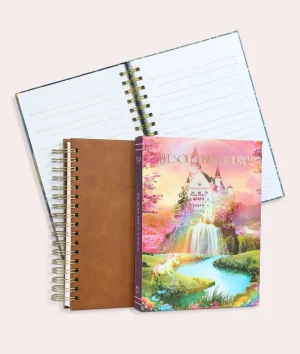
Spiral binding is a practical and functional binding method that uses a plastic or metal coil inserted through punched holes along the notebook spine.
The flexible coil allows pages to rotate freely, making spiral notebooks extremely convenient for writing, note-taking, and planning.

Advantages of Spiral Binding
Opens 360 degrees
Allows easy page turning
Provides a flat writing surface
Suitable for different notebook page count
Spiral notebooks are especially popular for school notebooks, planners, workbooks, sketchbooks and training materials.
For customers looking for practical custom notebook printing and binding, spiral notebooks are a flexible and user-friendly option.
Wire-O Binding Notebook
Wire-o binding is another popular choice among notebook binding methods. It uses a double-loop metal wire inserted through punched holes to hold the pages together.
Compared with spiral binding, wire-o creates a more professional and refined appearance.

Advantages of Wire-O Notebook Binding
Opens 360 degrees
Opens completely flat for comfortable writing
Durable metal wire structure
Professional appearance
Flexible page count based on wire-o diameter
Wire-o binding is commonly used for corporate notebooks, planners, recipe notebooks, journals.
Wire-o notebooks can also be customized with tab dividers, pocket, elastic band, etc add ons.
Concealed Wire-O Notebook
Concealed wire-o binding is a premium variation of standard wire-o binding. Instead of exposing the metal wire, the wire is hidden inside the cover structure, creating a cleaner and more elegant appearance.
This style is often used for premium planners, professional notebooks, and luxury stationery products.
There are two common options:
Semi-Concealed Wire-O
In semi-concealed wire-o binding, part of the wire remains visible while the cover partially hides the binding area.

Benefits include:
More affordable than fully concealed wire-o
Improved appearance compared with standard wire-o
Good balance between cost and design
Fully Concealed Wire-O
Fully concealed wire-o completely hides the metal wire inside the cover.

Benefits include:
Premium appearance
Cleaner spine design
Better protection of the wire
Luxury notebook feel
Concealed wire-o often used for premium planners, executive notebooks, designer notebooks and brand promotional notebooks.
Flexibound Notebook
Flexibound is a hybrid binding method that combines the flexibility of a softcover with the durability and premium appearance of a hardcover.
It usually uses flexible materials such as faux leather, printed paper or cloth, creating a sophisticated notebook that is lightweight and comfortable to carry.

Advantages of Flexibound Notebook
Premium appearance
Flexible cover design
Comfortable handling
Better durability than standard softcover
Excellent opening performance
Flexibound notebooks are ideal for users who want a luxury feel without the weight of a traditional hardcover notebook.
Flexibound notebooks are often used for travel notebooks, creative notebooks, personalized gifts, premium journals.
Saddle Stitch Notebook
Saddle stitch is one of the simplest and most economical notebook binding types. It uses metal staples placed through the folded center pages to secure the notebook.
This method is commonly used for thin notebooks and booklets, page count typically 8-64 pages.

Advantages of Saddle Stitch Binding
Low production cost
Fast manufacturing
Lightweight design
Good opening performance
Suitable for small notebooks
Saddle stitch binding often used for pocket notebooks, promotional notebooks, event notebooks, children’s activity notebooks and thin journals.
Singer Sewn Notebook
Singer sewn binding is a decorative and durable binding method that uses visible thread stitching along the spine.
Unlike traditional sewing hidden inside the spine, singer sewn notebooks highlight the stitching as part of the design.

Advantages of Singer Sewn Binding
Unique handmade appearance
Strong page connection
Flexible opening
Attractive decorative detail
Custom thread colors to match your theme or brand
Singer sewn notebooks are popular for artisan journals, creative notebooks, handmade-style products.
For brands seeking a distinctive notebook design, singer sewing adds craftsmanship and visual appeal. It is especially suitable for boutique stationery products and customized notebooks.
Less Common Notebook Binding Types
In addition to popular options, there are also many specialty notebook binding types used for unique designs, premium stationery products, and customized applications.
These less common types of notebook binding can help brands create notebooks with distinctive appearances, improved functionality, or a more handcrafted feel. When choosing a binding method for custom notebook printing, understanding these specialty options can help you develop a product that stands out in the market.
Swiss Binding Notebook
Swiss binding is a unique notebook binding method that combines the appearance of an exposed spine with the structure of traditional bookbinding.
In Swiss binding, the cover is attached only to the back of the book block while the spine remains partially or completely exposed. This creates a flexible notebook that opens easily while maintaining a stylish and modern appearance.
Swiss binding is often considered a premium alternative to traditional softcover binding.

Advantages of Swiss Binding
Excellent flexibility
Comfortable writing experience
Unique exposed spine appearance
Better opening performance than standard perfect binding
Suitable for creative and premium notebook designs
Because the spine is not fully restricted, Swiss binding allows the notebook to open more naturally, making it comfortable for daily writing.
Swiss binding is commonly used for designer notebooks, creative journals and artist notebooks.
Common cover materials include printed art paper, Kraft paper, speciality textured paper or cloth.
Swiss binding is a good choice for brands looking for a notebook that combines modern aesthetics with practical usability.
Plastic Comb Binding Notebook
Plastic comb binding uses a flexible plastic comb inserted through rectangular punched holes along the notebook edge.
Although it is more commonly used for reports, manuals, and training documents, it can also be used for certain notebook applications.

Advantages of Plastic Comb Binding
Affordable production cost
Pages can be removed and replaced
Available in different colors
Suitable for functional documents
Plastic comb binding is especially useful when users need to frequently update or replace pages.
Plastic comb binding often used for training notebooks, office notebooks, educational materials and workbooks.
Compared with wire-o or spiral binding, plastic comb binding has a less premium appearance and may not be ideal for luxury notebook products.
Exposed Binding Notebook
Exposed binding is a design-focused binding style where the stitching, thread, or spine structure is intentionally visible.
Instead of hiding the binding elements, exposed binding makes them part of the notebook’s visual identity.
This style creates a handmade, artistic, and premium appearance.

Advantages of Exposed Binding
Unique visual appeal
Creative and handcrafted appearance
Strong page connection
Allows distinctive design concepts
The exposed spine can become a major design feature, especially when using contrasting thread colors or specialty materials.
Exposed binding notebooks are often used for art journals, handmade-style notebooks, designer notebooks and creative brand products.
Customization options include:
Colored stitching thread
Different sewing patterns
Printed covers
Specialty paper
Decorative spine designs
For brands seeking a unique notebook product, exposed binding can create a strong visual impression.
Ring Binding Notebook
Ring binding is a flexible notebook system that uses metal rings to hold pages together. Unlike traditional bound notebooks, ring binding allows users to open the rings and add, remove, or rearrange pages.
This makes it highly functional for planners, organizers, and refillable notebooks.

Advantages of Ring Binding
Refillable design
Pages can be rearranged
Long-term usability
Flexible customization
Easy organization
Ring binding is popular among users who prefer customizable notebook systems.
Ring binding notebooks are widely used for personal planners, business organizers, study notebooks, goal-setting journals.
Loose Leaf Binder Notebook
Loose leaf binder notebooks are designed with removable pages that can be added, replaced, or reorganized.
Unlike traditional notebooks where pages are permanently attached, loose leaf systems provide maximum flexibility.
They are commonly used for planners, study systems, and professional organizers.

There are two main types:
Loose Leaf Plastic Binding
Plastic binding systems use lightweight plastic rings or discs to hold pages together.
Advantages:
Lightweight
Affordable
Easy page replacement
Available in various colors
Loose Leaf Metal Binding
Metal binding systems use stronger metal rings or discs, offering improved durability and a more premium appearance.
Advantages:
Stronger structure
Longer lifespan
Professional appearance
Better suited for frequent use
For custom notebook printing, loose leaf systems offer excellent flexibility and can be customized with different page layouts, inserts, dividers, and accessories.
Japanese Binding Notebook
Japanese binding is a traditional bookbinding technique known for its beautiful decorative stitching pattern.
Unlike conventional Western binding methods, Japanese binding places the thread stitching along the edge of the book, creating an artistic handmade appearance.
It does not use glue, making it a distinctive and environmentally friendly binding style.

Advantages of Japanese Binding
Unique handcrafted appearance
Decorative stitching design
No glue required
Suitable for artistic notebooks
Creates a premium handmade feeling
Limitations
While Japanese binding looks beautiful, it does have some practical limitations:
The notebook may not open completely flat.
The exposed stitching requires careful handling.
It is generally more suitable for decorative or specialty notebooks.
Japanese binding notebooks are commonly used for handmade journals, artist notebooks, sketch notebooks, and creative gifts.
For designers and artists, Japanese binding provides a traditional aesthetic that makes each notebook feel special and handcrafted.
Considerations When Choosing Notebook Binding
Choosing the right notebook binding type depends on several factors. A good binding method should match the notebook’s purpose, design requirements, budget, and expected usage.
Before starting custom notebook printing, consider the following factors.
Purpose
The first consideration is how the notebook will be used.
Different applications require different binding solutions:
Daily journals: hardcover, sewn binding, flexibound
Business notebooks: hardcover, wire-o, perfect binding
School notebooks: saddle stitch, spiral binding or perfect binding
Planners: wire-o, spiral binding, perfect binding or hardcover
Sketchbooks: spiral, wire-o, singer sewn binding or hardcover
Luxury gifts: hardcover
Understanding the purpose helps determine the ideal combination of binding, paper, and cover materials.
Budget
The production budget plays an important role in selecting a notebook binding method.
Generally:
Lower-cost options:
Saddle stitch
Perfect binding
Singer sewn
Mid-range options:
Spiral binding
Wire-o binding
Flexibound
Sewn perfect binding
Premium options:
Hardcover case binding
Specialty handmade binding
When planning custom notebook printing, it is important to balance appearance, functionality, and production cost.
Page Count
The number of pages directly affects which binding methods are suitable.
Examples:
Thin notebooks: saddle stitch or singer sewn
Medium notebooks: perfect binding, wire-o, spiral binding
Thick notebooks: sewn perfect binding or hardcover binding
Choosing the wrong binding type may cause problems such as poor opening performance or reduced durability.
Aesthetic Appeal
A notebook is often purchased based on appearance and emotional connection.
The binding style contributes significantly to the product’s overall look.
For example:
Hardcover creates a premium and professional impression.
Kraft saddle stitch creates a natural and minimalist style.
Japanese binding creates an artistic handmade feeling.
Flexibound provides a luxury but flexible appearance.
The right binding can strengthen brand identity and increase customer appeal.
Durability
Consider how frequently the notebook will be used.
For long-term daily use, choose stronger options such as:
Hardcover binding
Sewn perfect binding
Wire-o binding
Flexibound
For short-term promotional use, simpler options such as saddle stitch or perfect binding may be sufficient.
Functionality
Think about how users will interact with the notebook.
Important questions include:
Does it need to lay completely flat?
Do users need to remove pages?
Will it be carried frequently?
Does it need additional accessories?
For example:
Artists prefer spiral, wire-o, exposed spine or swiss binding, because pages stay flat.
Professionals may prefer hardcover notebooks for durability.
Students may prefer lightweight spiral notebooks.
Functionality should always be considered together with design and cost.
Custom Notebook Printing with Us
Choosing the right binding is an important step in creating a successful notebook, but it is only part of the process. Professional custom notebook printing also requires careful consideration of paper selection, cover design, print quality, finishing options, and production expertise to achieve the best results.
At BookPrintingChina, we offer complete custom notebook printing and binding solutions for businesses, publishers, designers, and brands worldwide. With over 25 years of printing experience, we help customers create high-quality notebooks in various styles, from practical everyday notebooks to premium journals and branded stationery.
Whether you need a custom notebook for retail, promotional use, corporate gifts, or personal projects, our experienced team can provide professional guidance from design to final production. Contact BookPrintingChina today to discuss your notebook printing needs and turn your ideas into beautifully crafted notebooks.