







Calendars are more than just tools for tracking dates, they are powerful organizational systems, branding assets, and creative products used across industries and personal life. Whether you are designing a promotional giveaway, creating a retail product, or planning a corporate gift, understanding the different types of calendar available can help you choose the best format for your needs.
In this article, we will take a closer look at the different types of calendars and share practical guidance to help you choose the most suitable option for your project.
Calendars come in a wide range of styles, sizes, and formats, each designed for a specific purpose. Some are created for visual impact, while others prioritize functionality and daily use. The right calendar depends on several factors, including:
Intended use (personal, promotional, retail, corporate)
Available space (wall, desk, pocket)
Design complexity
Budget and production requirements
From large-format wall displays to compact card calendars, each type offers unique advantages. Let’s explore them in detail.
Wall Calendar

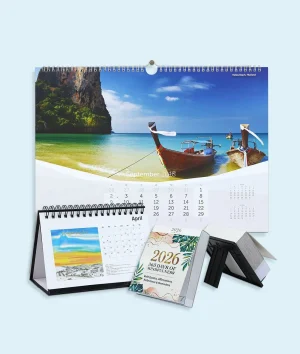
Wall calendars are one of the most popular and versatile types of calendar, widely used in homes, offices, schools, and commercial spaces. They not only serve as practical tools for tracking dates but also function as decorative pieces and effective marketing materials. Businesses often use wall calendars as promotional items because they offer long-term brand exposure throughout the entire year.
Feature
The key strength of a wall calendar lies in its visibility. Designed to be hung on a wall, it features large-format layouts with bold visuals and clearly printed dates that can be read from a distance. This makes it ideal for shared spaces where multiple people need to check schedules quickly.
Wall calendars are especially effective for:
Showcasing photography, artwork, or illustrations
Highlighting brand identity and messaging
Creating a strong visual presence in a room
Because of their size and placement, they naturally draw attention, making them a great combination of functionality and decoration.
Layout
Most wall calendars follow a multi-page structure, typically displaying one month per page. This format allows for a clean and organized presentation of both visuals and calendar information.
A standard wall calendar page usually includes:
A large image or design: Often placed at the top or center, this is the focal point of each page. It can feature product images, landscapes, artwork, or themed graphics.
A monthly date grid: Clearly structured with days, weeks, and dates laid out for easy reading. Weekends and holidays are often highlighted.
Space for notes or highlights: Some designs include extra room for writing reminders, appointments, or important events.
Additional layout elements may include:
Previous and next month mini calendars
Company logos or promotional messages
Inspirational quotes or seasonal themes
The balance between imagery and functionality is crucial to ensure the calendar is both attractive and practical.
Binding
Binding plays an important role in both the durability and usability of a wall calendar. The two most common options are:
Saddle Stitch Binding: This method uses staples along the fold line, allowing pages lay flat when opened. It is a cost-effective option suitable for thinner calendars with fewer pages. It works best for lightweight designs and shorter page counts.
Wire-O Binding: This is a more durable and premium option. Pages are bound using a double-loop wire, allowing them to flip smoothly and lay flat when opened. Wire-O binding often includes a built-in hanging hook, making it ideal for wall display and frequent use.
Choosing the right binding depends on your budget, page count, and desired quality level.
Materials
The materials you choose play a key role in determining the calendar’s overall appearance, texture, and durability.
Inside Pages: For image-focused designs, glossy art paper is highly recommended as it enhances color vibrancy, sharpness, and detail, making photos stand out. Matte art paper, on the other hand, provides a smooth, non-reflective surface with a more refined and premium look. If the calendar is intended for writing, uncoated paper is an ideal option, as it offers better ink absorption and a comfortable writing experience.
Cover: The cover is usually made from thicker cardstock to ensure strength and long-lasting protection. A sturdy cover not only protects the inner pages but also elevates the overall quality and feel of the product. It is commonly finished with glossy lamination for a bright, eye-catching appearance and added durability, or matte lamination for a more subtle, elegant, and non-reflective finish. For a more premium presentation, special finishes such as UV coating, foil stamping, or embossing can be applied to enhance visual appeal and create a distinctive look.
Design Tips
Designing an effective wall calendar requires balancing aesthetics with usability. Here are some practical tips:
Use high-resolution images: Since wall calendars are large, low-quality images will appear blurry or pixelated. Always use high-resolution visuals for the best results.
Maintain a consistent theme: Whether it’s seasonal photography, product showcases, or artistic designs, keep a unified style across all months to create a cohesive look.
Keep date grids clear and readable: Avoid overly decorative fonts or cluttered layouts. The primary function of a calendar is usability, so clarity is essential.
Highlight important dates: Use color accents or icons to mark holidays, special events, or key dates. This improves both functionality and visual appeal.
Allow space for writing: If the calendar is intended for daily use, ensure there is enough room in each date box for notes.
Consider margins and bleed areas: Leave sufficient space for binding, trimming, and hanging holes to avoid cutting off important design elements.
Incorporate branding thoughtfully: For promotional calendars, include logos and brand messages in a subtle and non-intrusive way to maintain a professional appearance.
Desk Calendar

Desk calendars are practical and functional tools designed for everyday use in offices, home workspaces, and reception areas. They provide a convenient way to check dates, plan schedules, and organize daily tasks while staying within easy reach on a desk. In addition to their usability, desk calendars are also widely used as promotional items, offering consistent brand visibility throughout the year.
Feature
Desk calendars are compact in size and typically come with a sturdy triangular base that allows them to stand firmly on a flat surface. This structure ensures stability and makes it easy to view the calendar at a glance without taking up too much space.
They are ideal for:
Quick reference to dates and appointments
Daily planning and task tracking
Office desks, counters, and reception areas
Their upright design keeps important information visible at all times, improving productivity and organization.
Layout
Most desk calendars feature a multi-page format with a monthly layout, allowing users to flip through pages easily as the year progresses. Each page generally includes:
A clear monthly date grid
Space for notes or reminders
Optional mini calendars for previous and upcoming months
In some cases, desk calendars may also use a daily page-a-day layout, which is ideal for users who need detailed scheduling, note-taking, or task management. This format is commonly used for planners, quote calendars, or productivity-focused designs.
Binding
Binding plays an important role in usability and durability:
Wire-O Binding: This is the most commonly used option. It allows pages to flip smoothly and lie flat, making it easy to navigate between months. It is durable and suitable for frequent use.
Ring Binding: Less commonly used, but still an option. It offers flexibility for adding or removing pages, though it is generally bulkier and less streamlined compared to Wire-O binding.
Material
The choice of materials affects both the appearance and functionality of the desk calendar.
Cover: The cover is typically made from 250–350 gsm thick cardstock to provide strength and durability. It is often finished with glossy lamination for a vibrant, eye-catching look or matte lamination for a more subtle, elegant appearance. For premium versions, a hardcover option can be used, usually made from 2–3 mm grey board wrapped with 157 gsm art paper, offering a more rigid and high-end feel.
Inside Pages: For image-focused designs, glossy art paper is highly recommended as it enhances color vibrancy, sharpness, and detail, making photos stand out. Matte art paper, on the other hand, provides a smooth, non-reflective surface with a more refined and premium look. If the calendar is intended for writing, uncoated paper is an ideal option, as it offers better ink absorption and a comfortable writing experience.
Design Tips
Creating an effective desk calendar requires a balance between design and usability. Consider the following tips:
Include ample writing space: Ensure each date box has enough room for notes, appointments, or reminders, especially for business or office use.
Use a stable base design: A well-constructed triangular stand is essential for durability and ease of use throughout the year.
Keep typography clear and legible: Choose clean fonts and appropriate font sizes to ensure readability from a comfortable viewing distance.
Incorporate branding subtly: For promotional calendars, include logos and brand elements in a way that enhances the design without distracting from the calendar’s function.
Add useful extra pages: Consider including additional content such as yearly overviews, holiday lists, contact pages, or note sections to increase usability and value.
Maintain a clean layout: Avoid overcrowding the design. A simple and organized layout improves both aesthetics and functionality.
Desk Pad Calendar

Desk pad calendars are a practical and spacious alternative to standard desk calendars, designed for users who need more room for writing and planning. Commonly used in offices, schools, and home workspaces, they combine the functionality of a calendar with the convenience of a notepad, making them ideal for organizing daily tasks and schedules.
Feature
The standout feature of a desk pad calendar is its large writing surface. Unlike upright desk calendars, it lies flat on the desk, providing a wide area for notes, reminders, and planning. This makes it especially useful for professionals who manage busy schedules or need to track multiple tasks throughout the day.
Desk pad calendars are ideal for:
Daily task planning and time management
Writing notes, reminders, and to-do lists
Keeping schedules visible and easily accessible
Protecting the desk surface while functioning as a writing pad
Their flat design also makes them comfortable to write on, offering both convenience and practicality.
Layout
Desk pad calendars typically use a multi-page format, with each page representing one month. The layout is printed directly on each sheet, allowing users to view the entire month at a glance.
A standard layout usually includes:
A large monthly date grid with spacious boxes
Clearly marked weekdays and weekends
Extra sections for notes or priorities
Mini calendars showing the previous and next months for quick reference
The layout is designed to maximize writing space while maintaining a clean and organized structure.
Material
The materials used in desk pad calendars are chosen for durability, stability, and writing comfort.
Backing Board: A 1.5–2 mm thick grey board is used as the base to provide strong support. This ensures the calendar stays flat on the desk and offers a stable writing surface.
Inside Pages: Typically made from 80 or 100 gsm uncoated paper, which is ideal for writing with pens or pencils. This type of paper prevents smudging and allows for smooth note-taking.
Corner Protectors: Black cardboard corner protectors are often added to keep the pages securely in place and prevent curling or folding during use. They also help maintain a neat and professional appearance.
Binding
Desk pad calendars are usually bound using perfect binding with perforated edges at the top. This allows each page to be easily torn off at the end of the month without damaging the remaining sheets.
The perforation ensures:
Clean and smooth page removal
Consistent usability throughout the year
A tidy appearance after each page is removed
Design Tips
A well-designed desk pad calendar should prioritize usability while maintaining a clean and professional look. Here are some helpful design tips:
Provide generous writing space: Ensure each date box is large enough for notes, appointments, and daily tasks. This is one of the main advantages of a desk pad calendar.
Use light grid lines: Keep lines subtle so they guide writing without overwhelming the page or creating visual clutter.
Include mini reference calendars: Adding previous and next month views helps users plan ahead and stay organized.
Add subtle branding: For corporate or promotional use, include logos and brand elements in a discreet way that does not interfere with usability.
Ensure clean tear-off edges: Proper perforation is essential for smooth page removal. Poor tearing can affect both functionality and appearance.
Keep the design simple and functional: Avoid overly decorative elements that may reduce readability or writing space.
Planner Calendar

Planner calendars combine traditional date tracking with productivity tools, making them one of the most versatile and functional types of calendar. Designed for both personal and professional use, they help users organize schedules, set goals, manage tasks, and track progress over time. Whether used for work, school, or daily life, planner calendars serve as an all-in-one system for staying organized and productive.
Feature
Planner calendars are typically compact and portable, making them easy to carry in a bag or use on the go. Unlike wall or desk calendars, they are designed for close, personal use and often include a variety of structured pages to support planning at different levels.
They are ideal for:
Managing daily, weekly, and monthly schedules
Tracking goals, habits, and productivity
Organizing personal and professional tasks
Keeping notes, ideas, and reminders in one place
Their flexibility allows users to customize how they plan their time, making them suitable for a wide range of lifestyles and needs.
Layout
Planner calendars feature a combination of layouts to support different planning styles. These typically include:
Monthly Overview Pages: Provide a big-picture view of the month, allowing users to track important dates, deadlines, and events at a glance.
Weekly Spreads: Break down the month into manageable sections, offering space to plan tasks, appointments, and priorities for each week. Weekly layouts often balance detail and overview, making them one of the most commonly used formats.
Daily Detailed Pages: Offer in-depth planning for each day, with dedicated sections for schedules, to-do lists, notes, and sometimes time slots. This layout is ideal for users with busy or highly structured routines.
Additional pages may include:
Goal-setting sections
Habit trackers
Notes pages
Yearly overviews or planning charts
A well-structured layout ensures users can easily navigate and maintain consistency in their planning habits.
Binding
The binding style affects both usability and the overall look of the planner:
Spiral or Wire-O Binding: Highly flexible and practical, allowing the planner to lay flat or fold back completely. This makes writing more comfortable and convenient for everyday use.
Perfect Binding: Provides a clean, book-like appearance. It offers a more streamlined look but does not lay as flat as spiral binding.
Hardcover Binding: A premium option that enhances durability and longevity. Hardcover planners are more resistant to wear and tear, making them suitable for long-term or heavy use.
Choosing the right binding depends on whether the priority is flexibility, aesthetics, or durability.
Material
Material selection plays a crucial role in both the writing experience and the overall quality of the planner.
Inside Pages: Typically made from 80 or 100 gsm uncoated offset paper, which is ideal for writing. This paper type reduces ink bleed-through and provides a smooth surface for pens and pencils.
Softcover: Usually made from 250–350 gsm cardstock or PU leather. Cardstock covers are lightweight and cost-effective, while PU leather offers a more premium and tactile feel.
Hardcover: Constructed using 2–3 mm grey board for rigidity, wrapped with materials such as laminated paper, cloth, PU leather, or other specialty finishes. Hardcover planners provide excellent protection and a high-end appearance.
Optional enhancements may include textured finishes, such as foil stamping, or embossing for added visual appeal.
Design Tips
Designing an effective planner calendar requires careful attention to both functionality and user experience. Here are some key considerations:
Organize layouts clearly: Ensure that each section, monthly, weekly, and daily, is easy to navigate. Consistent formatting helps users quickly find what they need.
Include productivity-focused sections: Add pages for goal setting, habit tracking, and notes to enhance the planner’s usefulness beyond simple scheduling.
Choose readable fonts and balanced spacing: Clean typography and proper spacing improve readability and reduce visual fatigue.
Add functional extras: Features such as ribbon bookmarks, tab dividers, elastic closures, pen holders, or inner pockets can greatly improve usability and convenience.
Maintain a clean and uncluttered design: Avoid overcrowding pages with too many elements. A simple, structured layout helps users stay focused and organized.
Tear-Off Calendar

Tear-off calendars are simple, practical, and widely used tools for everyday planning and time management. Known for their ease of use and compact design, they are commonly found in homes, offices, and retail environments. In addition to their functional purpose, tear-off calendars are also popular as promotional items, as they provide daily brand exposure throughout the year.
Feature
The defining feature of a tear-off calendar is its removable pages. Each page represents a specific day or week and can be easily torn off after use, revealing the next page underneath. This creates a sense of progression and keeps the calendar clean and up to date.
Tear-off calendars are:
Compact and space-saving
Easy to use and maintain
Suitable for both personal and professional environments
Ideal for daily engagement, especially when combined with quotes, tips, or messages
Their straightforward design makes them highly accessible and user-friendly for all age groups.
Layout
Tear-off calendars typically come in two main layout formats:
Daily Layout: Each page represents a single day, often including the date, day of the week, and sometimes additional content such as quotes, fun facts, or reminders. This format is ideal for users who prefer detailed daily interaction.
Weekly Layout: Each page displays an entire week, providing a broader view of schedules and tasks. This format is suitable for users who prefer planning in larger time blocks.
Depending on the design, pages may also include:
Holiday indicators
Inspirational messages
Notes or memo sections
The layout should prioritize clarity and quick readability.
Binding
Tear-off calendars are typically bound using perfect binding with perforated edges. This method ensures that pages are securely held together while still allowing them to be removed easily and cleanly.
Key benefits of this binding method include:
Smooth and effortless page removal
A neat and professional appearance after each page is torn off
Material
The materials used in tear-off calendars are selected for both durability and writing comfort.
Inside Pages: Usually printed on 80–100 gsm uncoated paper, which is ideal for writing. This paper type absorbs ink well and minimizes smudging, making it suitable for notes or markings.
Cover: Typically made from 250–350 gsm thick cardstock for strength and protection.
Stand
Tear-off calendars are typically used with a stand to keep them upright, stable, and easy to view on desks or countertops. Several stand options are available, depending on functionality, budget, and presentation style:
Plastic Stand: A sturdy and reusable option that provides strong support for daily use. It is durable and suitable for long-term applications.
Eco-Friendly Whiteboard Easel Stand: A sustainable choice made from environmentally friendly materials.
Folded Magnetic Triangle Rigid Board Stand: Made from thick rigid board and designed in a triangular shape for stability. The magnetic closure allows for easy assembly and secure positioning, making it both practical and visually clean.
The best stand option depends on your specific needs, including usage environment, cost considerations, and the overall look you want to achieve.
Design Tips
An effective tear-off calendar should be simple, functional, and engaging. Here are some useful design tips:
Keep layouts clean and easy to read: Avoid clutter and focus on clear typography and structured spacing to ensure quick readability.
Include engaging content: Adding motivational quotes, tips, fun facts, or daily messages can enhance user experience and encourage daily interaction.
Incorporate subtle branding: For promotional calendars, include logos or brand messages in a way that feels natural and not overwhelming.
Poster Calendar

Poster calendars combine practical date tracking with strong visual appeal, making them both functional tools and decorative pieces. Unlike traditional multi-page calendars, they present the entire year on a single sheet, allowing users to view all months at once. This format is especially popular for offices, classrooms, and promotional use, where quick reference and visual impact are equally important.
Feature
The defining feature of a poster calendar is its large-format design. It is created to display a full year at a glance, making it easy to check dates, plan ahead, and track long-term schedules without flipping pages. Its size also makes it an eye-catching element on any wall, often doubling as a piece of art or branding display.
Poster calendars are ideal for:
Long-term planning and scheduling
Office walls, meeting rooms, and shared spaces
Decorative or artistic displays
Promotional and branding purposes
Because of their visibility, they offer excellent exposure for designs, illustrations, or company messaging.
Layout
Poster calendars use a single-page layout, with all twelve months arranged on one sheet. The layout is typically structured in a grid format, ensuring that each month is clearly separated while maintaining a cohesive overall design.
Common layout features include:
Clearly defined monthly sections
Consistent date grids for easy reading
Highlighted weekends and holidays
Optional notes or legend areas
The arrangement can vary, months may be displayed in rows, columns, or creative formats, but clarity and organization are essential to ensure usability.
Material
Material selection plays a key role in both durability and visual quality.
Paper: Poster calendars are usually printed on heavy, premium glossy or matte art paper. Glossy paper enhances colors and image vibrancy, making it ideal for bold and graphic designs. Matte paper offers a softer, non-reflective finish with a more refined and professional look.
Finishing: A protective layer of glossy or matte lamination is often applied to improve durability and prevent wear, especially for calendars displayed all the year. Lamination also enhances the overall appearance, giving the poster a polished and high-quality feel.
Design Tips
Designing an effective poster calendar requires balancing aesthetics with readability. Here are some key tips:
Use bold, eye-catching visuals: Since poster calendars are often viewed from a distance, strong graphics, colors, and imagery help capture attention and enhance visual appeal.
Ensure readability from a distance: Choose clear fonts and appropriate font sizes so that dates and text can be easily read even from across a room.
Organize months clearly and logically: Maintain a structured layout that allows users to quickly locate specific dates without confusion.
Balance design elements: Avoid overcrowding the page with too many graphics or text. A clean, well-balanced design improves both usability and visual impact.
Consider color coding: Using different colors for months, weekends, or special dates can improve clarity and navigation.
Three-Month Calendar

Three-month calendars are widely used in offices, factories, and commercial environments where clear scheduling and long-term planning are essential. Their practical design allows users to view multiple months at once, making it easier to manage deadlines, appointments, and ongoing projects.
Feature
The key feature of a three-month calendar is its ability to display three consecutive months simultaneously—typically the previous, current, and upcoming month. This format provides a broader time perspective, helping users plan ahead without losing track of current dates.
Many three-month calendars also include a sliding date marker, which can be adjusted daily to highlight the current date. This small but useful feature improves usability and ensures users can quickly identify the day at a glance.
Layout
A typical layout includes:
Three clearly separated monthly sections
Large, easy-to-read date grids
Highlighted weekends and holidays
A header area for branding or titles
The vertical arrangement makes it easy to scan dates and compare schedules across months.
Binding
Wire-O binding is the most common choice for three-month calendars. It allows pages to flip smoothly and hang neatly on the wall. This binding method is durable and supports frequent use, making it ideal for office environments.
Material
Cover and Panels: Usually made from 300–350 gsm C1S paper, providing strength and a smooth surface for high-quality printing. These sections often include branding, logos, design artwork, or company information.
Monthly Sheets: Printed on 80 or 100 gsm uncoated paper, which is suitable for writing notes or marking important dates. The uncoated surface ensures better ink absorption and reduces smudging.
Design Tips
To create an effective three-month calendar, focus on clarity and usability:
Highlight the current date clearly: Use a sliding marker or color accents to make the current day easy to identify.
Use color coding for different months: Differentiating months with subtle color variations helps users quickly distinguish between them.
Keep the layout structured and easy to follow: Avoid clutter and maintain consistent spacing to improve readability.
Include branding in header sections: Use the top panel for logos, company information, or promotional messages without interfering with the calendar grids.
Magnetic Calendar

Magnetic calendars are compact, practical, and highly convenient planning tools designed mainly for home and light office use. Because they can be easily attached to metal surfaces, they are often placed in high-visibility areas such as kitchens, refrigerators, or office cabinets, making it easy for users to check dates and reminders throughout the day.
Feature
The main feature of a magnetic calendar is its built-in magnetic backing, which allows it to securely attach to any magnetic surface. This eliminates the need for hooks, nails, or adhesive, making it a flexible and user-friendly option.
Magnetic calendars are commonly used for:
Quick daily date reference
Family scheduling and reminders
Kitchen or household planning
Light office task tracking
Their convenient placement ensures that important information is always visible and easily accessible.
Layout
Magnetic calendars typically use a compact single-sheet layout, most often designed as a monthly overview. This simple format ensures clarity while maximizing usability in a small space.
A standard layout may include:
A monthly date grid
Clearly marked weekends and holidays
Small notes or reminder sections
Optional branding or decorative elements
Because the surface area is limited, the design must be clean and well-organized to avoid visual clutter.
Material
Magnetic Base: The foundation of the calendar is usually a 1 mm thick magnetic board. This provides strong adhesion to metal surfaces such as refrigerators or filing cabinets, ensuring the calendar stays securely in place.
Printed Surface: The magnetic board is typically wrapped with 157 gsm laminated art paper. This layer enhances print quality, protects the surface from wear, and adds a smooth, durable finish. Lamination also helps resist moisture and stains, which is especially important for kitchen environments.
Design Tips
To create an effective magnetic calendar, both functionality and simplicity should be prioritized:
Keep the design simple and functional: Avoid overcrowding the layout. A clean design ensures dates are easy to read at a glance.
Use writable surfaces when possible: Adding a writable laminated layer allows users to mark notes or reminders directly on the calendar.
Ensure strong magnetic adhesion: High-quality magnetic backing is essential to prevent slipping or falling, especially on frequently used surfaces.
Use bright, visible colors: Since magnetic calendars are often viewed from a distance, vibrant colors can improve visibility and appeal.
Include space for notes or reminders: Small sections for grocery lists, appointments, or important reminders increase practicality.
Advent Calendars

Advent calendars are festive, interactive calendars that are especially popular during the holiday season. Traditionally used to count down the days leading up to Christmas, they have evolved into creative and highly customizable products used by brands, retailers, and families alike. Today, advent calendars are not only decorative but also highly engaging gifting and promotional items.
Feature
The defining feature of an advent calendar is its interactive countdown design. It includes multiple small doors, windows, drawers, or compartments—each representing a day of the countdown period. Users open one section per day to discover hidden surprises such as chocolates, small gifts, toys, skincare samples, or motivational messages.
This daily interaction creates excitement and anticipation, making advent calendars especially popular for:
Holiday gifting and celebrations
Retail and promotional campaigns
Brand engagement and customer experience
Family and children’s holiday traditions
The combination of surprise and structure makes them both entertaining and meaningful.
Material
Structural Base: Advent calendars require strong internal support to hold multiple compartments. Therefore, they are typically made from sturdy cardboard or rigid board to ensure durability and maintain shape throughout use.
Printed Surface: The exterior and decorative surfaces are usually printed on premium C1S paper, which provides a smooth, high-quality finish suitable for vibrant graphics and detailed designs. This layer is often laminated for added protection and visual enhancement.
The combination of rigid structure and premium printing ensures both durability and an attractive presentation.
Design Tips
Designing an effective advent calendar requires creativity, durability, and user engagement:
Focus on creative and engaging concepts: Use storytelling, themed illustrations, or brand-related ideas to make each day feel special and exciting.
Use vibrant colors and festive themes: Bright, seasonal designs help create a joyful holiday atmosphere and increase visual appeal.
Design compartments for easy opening: Each door, drawer, or flap should open smoothly without tearing or damaging the structure.
Dry Erase Calendars

Dry erase calendars are highly practical, reusable planning tools designed for flexible scheduling and long-term use. They are widely used in homes, offices, classrooms, and shared workspaces because they allow users to quickly update plans without needing to replace the calendar each month. This makes them both cost-effective and environmentally friendly.
Feature
The key feature of a dry erase calendar is its reusable writing surface. Users can easily write, erase, and update schedules as needed, making it ideal for dynamic planning environments where changes happen frequently.
Dry erase calendars are commonly used for:
Monthly scheduling and planning
Office task management and team coordination
Family activity planning at home
Classroom or training schedules
Their flexibility allows users to keep information current at all times without waste or replacement.
Layout
Dry erase calendars typically use a single-page monthly layout, designed for clarity and ease of use. The entire month is displayed on one surface, allowing users to view all dates at a glance.
A standard layout often includes:
A clearly structured monthly grid
Dedicated boxes for each day
Sections for notes, reminders, or priorities
Highlighted weekends or important dates
Because users write directly on the surface, the layout must be simple and well-organized to avoid clutter and confusion.
Material
Dry erase calendars are made from laminated surfaces designed for compatibility with dry-erase markers. The lamination provides a smooth, non-porous finish that allows ink to be easily wiped off without leaving stains or residue.
This durable surface ensures:
Long-lasting usability
Easy cleaning and maintenance
Resistance to ghosting or smudging
Design Tips
To create an effective dry erase calendar, both functionality and clarity should be prioritized:
Use clean, minimal layouts: Keep the design simple to ensure users can quickly read and update information.
Use bold lines for structure: Clear grid lines help organize space and improve readability.
Provide enough writing space: Each date box should be large enough for notes, appointments, or reminders.
Consider magnetic backing: Adding a magnetic layer can improve usability and make the calendar easier to display on walls or refrigerators.
Card Calendars
Card calendars are compact, lightweight, and highly cost-effective planning tools. Because of their small size and simple structure, they are widely used for promotional purposes, marketing giveaways, and brand awareness campaigns. Despite their minimal format, they remain practical for quick date reference and everyday carrying.
Feature
The key feature of card calendars is their pocket-sized, portable design. They are easy to carry in wallets, bags, or pockets, making them convenient for users who need quick access to calendar information on the go.
Card calendars are especially popular for:
Corporate giveaways and trade shows
Retail promotions and branding campaigns
Membership cards or loyalty inserts
Small-scale personal use
Their affordability and portability make them an effective marketing tool with long-lasting visibility.
Layout
Card calendars typically use a single-page layout, where all twelve months are clearly displayed on one side. This compact arrangement allows users to view the entire year at a glance without flipping pages.
Common layout elements include:
A clean annual calendar grid
Clearly marked months and dates
Highlighted weekends or holidays (optional)
Space for branding, logos, or contact details
Since the design space is limited, clarity and simplicity are essential for readability.
Material
Card calendars are usually printed on 300–350 gsm C1S paper. One side of the paper is coated to support vibrant images, branding, or promotional graphics, while the uncoated side is typically used for the calendar dates to ensure better readability and writing compatibility if needed. Glossy or matte lamination can be applied to the front side to enhance durability, improve appearance, and provide additional protection against wear and tear. Rounded corners are often added to improve safety, prevent bending, and give the card a more polished and premium feel.
Design Tips
To create an effective card calendar, focus on simplicity and strong visual structure:
Keep the layout clean and readable: Avoid overcrowding the design to ensure dates remain easy to see.
Use strong branding elements: Incorporate logos, colors, and visual identity to maximize marketing impact.
Optimize limited space efficiently: Every section should serve a purpose due to the compact size.
Ensure clear typography: Text must remain legible despite the small format, so choose simple, bold fonts.
Talk to Us
Choosing the right calendar type is essential for achieving both functional and visual goals. Whether you are creating a promotional product, retail item, or personal project, the right combination of format, materials, and design will make your calendar stand out.
At BookPrintingChina, we specialize in custom calendar printing with a wide range of options tailored to your needs. From material selection to binding and finishing, our team is here to guide you through every step of the process.
If you are unsure which calendar type is best for your project, feel free to reach out to us. We are happy to help you bring your ideas to life with high-quality printing solutions.