



Choosing the right coloring book binding is an important part of creating a functional, attractive, and durable book. Whether you are publishing a children’s coloring book, designing an adult coloring book, producing an educational activity book, or developing a premium gift edition, the binding affects how easily readers can turn pages, how comfortably they can color, how long the book lasts, and how much it costs to manufacture.
Different coloring book binding methods offer different advantages. Saddle stitching is an economical option for thin booklets, while perfect binding creates a professional paperback appearance. Spiral and Wire-O binding allow pages to turn easily and lie flat, making them particularly suitable for activity books. Sewn hardcover binding provides excellent durability and a premium presentation for high-quality coloring books.
The best choice depends on several factors, including page count, paper weight, budget, intended use, and target audience. Understanding these options before preparing your artwork can help you avoid production problems and create a coloring book that meets your readers’ expectations.
In this guide, we explore the common coloring binding methods, and provide tips on how to select the right option.
The Importance of Coloring Book Binding
Coloring book binding does more than hold printed pages together. It affects the entire user experience, from opening the book to coloring detailed illustrations and storing the finished product. The right binding method balances functionality, appearance, durability, and production cost.
Improving the Coloring Experience: A coloring book should allow readers to access illustrations comfortably without fighting against the binding. When pages are difficult to open or the inner edges are too close to the spine, users may struggle to color small details near the center of the book.
Protecting Pages and Extending Book Lifespan: Coloring books are often handled repeatedly. Readers turn pages, carry books between locations, and sometimes use them with pencils, crayons, markers, or other coloring materials. A suitable binding method helps keep the pages securely attached and the book structurally sound.
Creating the Right Appearance: Binding contributes significantly to a coloring book’s visual presentation. It affects the cover structure, spine appearance, page arrangement, and overall impression of quality.
Managing Printing and Production Costs: Binding affects the total manufacturing cost of a coloring book. Each method involves different materials, equipment, setup requirements, and production processes.
The lowest-cost option is not always the most economical choice for the finished product. A binding method that does not suit the book’s thickness or intended use can lead to poor usability, premature damage, or unnecessary production compromises.
Choosing the right binding early helps you establish realistic production specifications and balance cost with quality.
Common Coloring Book Binding Methods
Several binding methods are widely used for coloring books. Each has distinct characteristics, advantages, and limitations. Understanding how they work makes it easier to select a suitable option for your project.
Saddle-Stitch Binding
Saddle-stitch binding is a popular and economical method for thin coloring books, activity booklets, and children’s publications. The printed sheets are folded together, nested inside one another, and secured along the center fold with metal staples.
Because the pages are formed from folded sheets, each sheet contributes four pages to the interior. This construction makes saddle stitching particularly suitable for relatively short publications that do not require a printed spine.
Advantages of saddle-stitch binding
Affordable production: Saddle stitching generally requires fewer materials and less finishing work than more complex binding methods.
Lightweight construction: The finished book is easy to carry, distribute, and store.
Simple page turning: Readers can open the book comfortably, especially when the page count is relatively low.
Suitable for short runs and large quantities: It works well for promotional booklets, children’s coloring books, classroom activities, and event giveaways.
Compact appearance: The slim profile suits publications that prioritize simplicity and affordability.
Limitations of saddle-stitch binding
Saddle stitching is best suited to thin books. As page count and paper thickness increase, the folded sections become bulkier, and the outer pages may extend beyond the inner pages. This effect, known as creep, must be considered during imposition and trimming.
The staples also remain visible along the center fold, and the book does not have a conventional square spine. Saddle stitching is therefore less suitable for thick coloring books or premium products that require a substantial spine.
Best applications
Saddle-stitched binding is ideal for children’s coloring books, short activity books, educational handouts, promotional coloring booklets, and other publications with relatively few pages.

Perfect Binding and Sewn Perfect Binding
Perfect binding is commonly used for paperback coloring books that need a professional appearance and a square spine. The interior pages are gathered into a block, and their spine edges are prepared and attached to a printed cover using adhesive.
Depending on the binding process, the spine edge may be milled or otherwise prepared to help the adhesive bond to the paper. The cover is then wrapped around the book block, and the finished book is trimmed to size.
Sewn perfect binding follows a similar finishing approach but adds thread sewing to the construction. The interior is arranged into folded sections, known as signatures, which are sewn together before the spine is glued and the paperback cover is attached. This additional step can improve page security and durability.
Advantages of perfect binding
Professional paperback appearance: A square spine gives the book a familiar retail-ready look.
Room for spine printing: When the spine is sufficiently wide, you can print the book title, author, or publisher information.
Suitable for thicker books: Perfect binding can accommodate many coloring books with higher page counts.
Efficient production: Standard perfect binding is widely used for commercial paperback books.
Advantages of sewn perfect binding
Sewn perfect binding combines the appearance of a paperback with a stronger internal construction. Sewing helps hold the signatures together, reducing reliance on adhesive alone to keep the sections connected. It is a useful option for thicker coloring books that will be handled frequently.
Limitations
Standard perfect-bound books do not generally open completely flat without resistance. This can make coloring near the inner margins less convenient, particularly for illustrations that extend across two facing pages.
The spine must also have enough width for the selected binding process. Very thin books may not be suitable for conventional perfect binding, and the minimum viable thickness depends on the materials used.
Sewn perfect binding usually costs more than standard perfect binding because it requires additional sewing operations and setup.
Best applications
Perfect binding is suitable for paperback adult coloring books, children’s coloring books with larger page counts, themed illustration collections, and retail publications that need a square spine.
Sewn perfect binding is worth considering for thicker or frequently used coloring books where additional page security is important.

Spiral and Wire-O Binding
Spiral and Wire-O binding are popular choices for coloring books that focus on ease of use and flat opening performance. Both methods use a series of holes punched along the binding edge, but they differ in their binding components and appearance.
Spiral binding
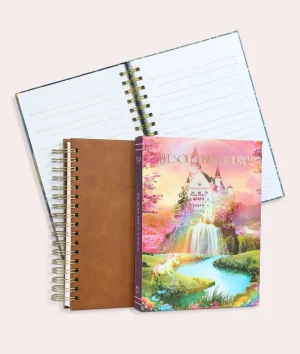
Spiral binding, also called coil binding, uses a continuous plastic or metal coil threaded through the punched holes along the edge of the book. The coil allows pages to rotate around the binding, making the book easy to open and turn.
Plastic coils are available in various colors and sizes, allowing the binding to complement the cover design. They are flexible and do not have the individual wire loops associated with Wire-O binding.
Spiral binding is especially useful for coloring books that are used on desks, in classrooms, or during travel. The pages can turn freely, and the book can generally lie flat when opened. Depending on the coil design and construction, pages may also rotate around the binding toward the back.
Wire-O binding
Wire-O binding uses a series of paired metal loops threaded through punched holes and closed to form a continuous row of double loops. It creates a neat, structured appearance and allows pages to turn smoothly.
Wire-O binding is often selected for artist coloring books, instructional coloring books, and educational activity books. Its metal loops can provide a polished appearance, and the book can generally open flat for convenient use.
However, the metal loops may bend if subjected to excessive pressure, and the binding edge requires sufficient clearance to prevent interference with illustrations or text.
Advantages of spiral and Wire-O binding
Excellent flat-opening performance: Both methods allow pages to lie flat on a working surface.
Convenient page turning: Readers can move between illustrations without repeatedly closing the book.
Suitable for activity-based products: The construction works well for books used while coloring, drawing, writing, or completing exercises.
Flexible design choices: Plastic coil colors and metal wire finishes can complement different cover designs.
Practical for workbooks: These methods are useful when readers need to reference and use individual pages frequently.
Limitations
Spiral and Wire-O binding require holes along the binding edge. This reduces the printable area near that edge, so important artwork, lettering, and decorative details must be positioned with adequate clearance.
The binding components also add manufacturing costs compared with simple saddle stitching. Plastic coils may become damaged under rough handling, while metal Wire-O loops can bend or become misshapen if compressed.
Neither method is necessarily the best choice for every retail coloring book. The exposed binding edge creates a different visual style from a conventional paperback or hardcover.
Best applications
Spiral and Wire-O binding are ideal for educational coloring books, classroom workbooks, instructional activity books, adult coloring books with intricate illustrations, and publications that need to remain open during use.

Sewn Hardcover Binding
Sewn hardcover binding is a premium option for coloring books that require durability, a substantial appearance, and long-term use. The interior pages are generally arranged into folded signatures and sewn together. The resulting book block is attached to a rigid cover structure made from board wrapped in printed or decorative paper.
Depending on the design, the book may also include endpapers, a reinforced spine, ribbon markers, headbands, or other finishing details.
The sewn construction helps hold the page sections together, while the rigid cover protects the interior from everyday handling and storage. This combination makes sewn hardcover binding particularly suitable for premium coloring books, gift editions, and collectible publications.
Advantages of sewn hardcover binding
Excellent durability: Sewing helps secure the interior signatures, while the rigid cover provides structural protection.
Premium presentation: A hardcover creates a substantial, high-quality appearance.
Good opening performance: Properly constructed sewn books can open comfortably, although they do not always lie completely flat.
Protection during storage: The rigid covers help protect pages from bending and other handling damage.
Limitations
Sewn hardcover binding is generally more expensive than saddle stitching, standard perfect binding, and many coil-bound options. It also adds weight and bulk, which may affect packaging, shipping, and retail pricing.
Production involves multiple stages, including sewing, cover manufacturing, case making, and book assembly. This makes it less practical for low-budget coloring books where a simple binding method would provide sufficient performance.
Best applications
Sewn hardcover binding is well suited to premium adult coloring books, collector’s editions, gift books, art-focused publications, and coloring books intended for repeated use over an extended period.

Coloring Book Binding Comparison
Comparing coloring book binding methods side by side helps you identify the best option for your page count, budget, intended use, and desired appearance.
The table below provides a general overview of the four main binding categories.
| Binding method | Relative cost | Lay-flat performance | Durability | Best suited for |
|---|---|---|---|---|
| Saddle stitch | Low | Relatively good for thin books | Low to moderate | Thin coloring books and booklets |
| Perfect binding | Low to moderate | Limited near the spine | Moderate | Paperback coloring books |
| Sewn perfect binding | Moderate to high | Generally better than standard perfect binding | High | Thicker paperback coloring books |
| Spiral binding | Moderate to high | Excellent | Moderate to high, depending on coil quality | Activity books and workbooks |
| Wire-O binding | Moderate to high | Excellent | Moderate to high, depending on wire quality | Premium workbooks and instructional books |
| Sewn hardcover | High | Good to very good, depending on book thickness | Very high | Premium and keepsake coloring books |
Which Binding Method Offers the Best Value?
The best-value coloring book binding method depends on the product’s requirements rather than the binding price alone.
Saddle stitching is generally the most economical choice for thin coloring books. It provides a practical balance of affordability, portability, and ease of use without requiring a separate spine.
Perfect binding is a strong option for standard paperback coloring books that need a professional retail appearance. It offers a square spine without the added cost of hardcover construction.
Spiral and Wire-O binding can provide better usability for books that need to remain open during coloring. Although these methods typically cost more than saddle stitching, the improved functionality may justify the additional expense for educational and activity-based products.
Sewn hardcover binding is best suited to projects where durability, presentation, and perceived value are priorities. While the initial manufacturing cost is higher, it may be appropriate for premium products sold at a higher retail price.
When comparing quotes, consider the total cost of the finished book, including paper, cover materials, printing, binding, finishing, packaging, and shipping. Comparing complete specifications provides a more accurate basis for choosing the right method.
Considerations When Choosing The Coloring Book Binding

Selecting a binding method requires more than deciding which option looks best. You should evaluate the book’s physical specifications, intended use, and production budget before finalizing the design.
Page Count
Page count is one of the most important factors in coloring book binding because it affects the thickness of the book, the suitability of different binding methods, and the manufacturing process.
Saddle stitching is generally best for relatively thin books. As the number of pages increases, the folded sheets create a thicker center, and the outer pages may extend farther than the inner pages. Your printer can help determine whether saddle stitching remains suitable for your selected paper and finished size.
Perfect binding is often appropriate for books with enough pages to form a stable spine. The finished spine width depends on the number of sheets and paper weight. Sewn perfect binding can be considered when additional strength is desirable for a thicker paperback.
Spiral and Wire-O binding can accommodate a range of page counts, provided the selected coil or wire diameter is suitable for the finished book block. The binding must be large enough to accommodate the pages without making them difficult to turn.
Sewn hardcover binding is suitable for many thicker coloring books, although the final thickness and construction should be confirmed during production planning.
Remember that page count and sheet count are different. A printed sheet can contain multiple pages, depending on how it is folded and printed. When requesting a quote, specify the total interior page count, whether the cover is included in that count, and the paper stock you plan to use.
Budget
Your budget determines which binding options are practical for the project. However, you should consider the cost in relation to the book’s intended retail price, quality expectations, and expected lifespan.
For low-cost coloring books, saddle stitching is usually an economical solution. It is particularly suitable for children’s booklets, giveaways, and publications designed for short-term use.
Perfect binding offers a professional paperback finish and is often a practical choice for commercially published coloring books. Sewn perfect binding costs more because of the additional sewing process, but it can be worthwhile for thicker books that need stronger page attachment.
Spiral and Wire-O binding involve additional components and punching operations. Their costs depend on the binding material, diameter, color, and production specifications.
Sewn hardcover binding generally requires a larger investment because it involves rigid boards, cover wrapping, sewing, and additional assembly work. Premium finishes can increase the cost further.
Order quantity also affects the unit price. Larger orders may reduce the per-book cost by distributing setup and production expenses across more copies, although the actual savings depend on the project.
To control costs, finalize your specifications before production, select materials that match your requirements, and ask your printer to compare suitable binding options at your target quantity.
Coloring Experience and Ease of Use
The binding should support the way readers interact with the book. A coloring book that is comfortable to use can provide a better experience and make the illustrations more accessible.
For illustrations that require detailed work near the inner edge, spiral and Wire-O binding are often strong choices because they allow the pages to lie flat. This is particularly useful for educational coloring books, mandala coloring books, and activity books used on a desk.
Saddle-stitched books can also provide a comfortable coloring experience when they are relatively thin. Their folded structure allows pages to open naturally, although the center spread may not remain perfectly flat.
Perfect-bound books are suitable for conventional paperback coloring books, but the inner margins need careful planning. Artwork positioned too close to the spine may become difficult to reach without pressing the book open.
Sewn hardcover books can offer a comfortable reading and coloring experience when their construction is designed for good opening performance. However, not every hardcover opens completely flat.
Also consider whether illustrations extend across two facing pages. If a continuous image spans the center, choose a binding that minimizes the visual interruption and allow for the central gap during artwork preparation.
Durability and Intended Use
Consider how frequently the coloring book will be used and how it will be handled.
For a short promotional booklet or a simple children’s activity book, saddle stitching may provide adequate durability at a low cost. Perfect binding is appropriate for many paperback coloring books intended for normal retail use.
If the book will be used frequently in classrooms, workshops, or instructional settings, spiral or Wire-O binding may be more convenient because users can turn pages easily and keep the book open while working.
For premium coloring books intended to be retained, collected, or given as gifts, sewn hardcover binding provides a strong combination of structural protection and presentation.
Durability depends on more than the binding method. Paper quality, adhesive selection, sewing quality, cover construction, and finishing all influence the finished product. Proper material selection and manufacturing quality are essential for reliable results.
Target Audience and Purpose
The intended audience should guide your choice of binding.
Children’s coloring books: Saddle stitching is suitable for many thin children’s coloring books because it is lightweight and economical. Perfect binding is worth considering for thicker books or products designed for retail shelves.
Adult coloring books: Perfect binding offers a familiar paperback appearance, while spiral and Wire-O binding are suitable for detailed coloring activities that benefit from a flat working surface. Sewn hardcover binding works well for premium editions.
Educational coloring books: Spiral and Wire-O binding are practical when users need to complete exercises, write notes, or work across the page. Saddle stitching may be suitable for short classroom activities.
Premium and gift coloring books: Sewn hardcover binding creates a substantial presentation and offers good durability. Cover finishes such as foil stamping, embossing, and spot UV can further enhance the appearance.
Promotional coloring books: Saddle stitching is generally a practical choice when affordability and distribution volume are the main priorities.
Think about where the book will be sold, how readers will use it, and what price point the market can support. These considerations will help you select a binding method that balances appearance, functionality, and cost.
FAQs About Coloring Book Binding
Why must a saddle-stitched coloring book have a page count divisible by four?
Saddle-stitched coloring books are assembled from folded sheets. Each folded sheet creates four pages: two pages on the front and two on the back.
As a result, the interior page count is typically a multiple of four. If your artwork does not fill the required number of pages, the printer may need to add blank pages.
When preparing your files, confirm how the printer counts interior pages and whether the cover is specified separately. This helps prevent page-count errors and ensures the file is suitable for production.
What is the minimum recommended spine width for a perfect-bound coloring book?
A spine width of approximately 3 mm can be used as a preliminary reference for certain perfect-bound coloring books. However, it is not a universal minimum, because the achievable spine width depends on the paper type, paper thickness, and construction.
The number of pages alone does not determine spine width. Different paper stocks with the same page count can produce noticeably different book thicknesses.
Before designing the cover, ask your printer to calculate the spine width using the final paper specifications. Use the supplied cover template to position the spine artwork, title, and other elements accurately.
Which coloring book binding method opens flat?
Saddle stitching, spiral binding, Wire-O binding, and sewn hardcover binding can all offer useful opening performance, but they behave differently.
Spiral and Wire-O binding are generally the best options when the book needs to lie flat on a table during coloring. Saddle-stitched books can open relatively flat, particularly when they are thin, although the pages may not remain completely flat without being held down.
Sewn hardcover books can also open well when properly constructed, but the rigid cover and spine design may limit how flat they can lie. Standard perfect binding generally offers less flexibility at the spine.
Which coloring book binding method is the most affordable?
Saddle stitching is generally the most affordable binding method for thin coloring books. It uses a straightforward construction process and relatively few materials, making it suitable for booklets, promotional publications, and children’s coloring books.
For thicker publications, perfect binding is often a cost-effective alternative. The most economical solution depends on the page count, paper stock, order quantity, and production requirements.
What margins and gutter allowances are needed for different binding methods?
Margins and gutters help protect important artwork and text from being trimmed or hidden by the binding.
For perfect-bound coloring books, a useful starting point is a 5 mm safe margin from the trim line and an 8–10 mm gutter near the binding edge. Thicker books or artwork extending toward the center may require a larger gutter.
For spiral and Wire-O binding, a 5 mm safe margin from the trim line and approximately 12 mm of clearance from the binding edge are useful preliminary guidelines. The exact clearance should account for the punched holes, binding component, and artwork placement.
For saddle-stitched books, keep important details away from the trim and center fold, and follow the printer’s template for the selected page count. For sewn hardcover books, allow for the hinge, spine, and cover construction when preparing the files.
These measurements are starting points rather than universal requirements. Always follow the printer’s final specifications, especially when illustrations extend across a spread.
Which coloring book binding method is the most durable?
Sewn hardcover binding is generally one of the most durable options for premium coloring books. The interior signatures are sewn together, and the rigid cover provides additional protection.
Sewn perfect binding can also provide strong page attachment while maintaining a paperback appearance. However, the final durability of any book depends on materials, workmanship, binding quality, and how the product is used.
For most short coloring books, a simpler binding method may provide sufficient durability without unnecessary expense.
Which binding method is best for coloring books with few pages?
Saddle stitching is generally the best choice for coloring books with relatively few pages (8-48 pages). It is lightweight, economical, and well suited to thin booklets.
If the book is slightly thicker or requires a conventional square spine, perfect binding may be worth considering, provided the book meets the printer’s minimum thickness requirements.
For short activity books that need to remain open while readers color or write, spiral binding may also be suitable.
Which binding is best for coloring books that need to lay completely flat?
Spiral and Wire-O binding are generally the best choices when a coloring book needs to lie flat on a working surface. Their construction allows pages to rotate around the binding without the resistance commonly associated with adhesive-bound spines.
These methods are particularly useful for detailed illustrations, classroom activities, and coloring books used on desks.
Saddle stitching can also open relatively flat when the book is thin, but the center pages may lift or shift. Sewn hardcover books can have good opening performance, although complete flatness is not guaranteed. If completely flat opening is essential, discuss the intended use with your printer before selecting the binding.
How does page count affect coloring book binding?
Page count influences the book’s thickness, binding suitability, production cost, and cover design.
Thin coloring books are often well suited to saddle stitching. As the page count increases, perfect binding becomes a practical option for creating a square spine. Sewn perfect binding and sewn hardcover binding are useful for thicker books that need additional structural strength.
Spiral and Wire-O binding can accommodate different page counts, provided the coil or wire diameter is correctly matched to the book block.
Page count also affects paper consumption, printing imposition, and the final spine width. Before finalizing your layout, confirm the required page-count format for your selected binding method and request a spine calculation when necessary.
What affects coloring book binding costs?
Several factors determine the total cost of coloring book binding.
Page count: More pages generally require more paper and may involve a more substantial binding structure.
Paper stock and weight: Heavier or thicker paper increases the book block’s thickness and may affect the binding materials required.
Order quantity: Larger quantities may reduce the unit cost by spreading setup and production expenses across more copies.
Binding method: Saddle stitching is generally economical, while sewn perfect binding and sewn hardcover binding involve additional processes.
Book size: Larger trim sizes affect paper usage, printing layout, and finishing requirements.
Production complexity: Special layouts, unusual specifications, and additional quality-control requirements may affect the quote.
Packaging and shipping: Packaging choices, order weight, destination, and delivery method influence the overall project cost.
To receive an accurate quote, provide your printer with the finished size, total page count, interior paper specifications, cover requirements, binding preference, order quantity, and shipping destination.
Print Coloring Book With Us
Choosing the right coloring book binding is an important step in producing a book that meets your quality, functionality, and budget requirements. Whether you need an economical saddle-stitched booklet, a professional perfect-bound paperback, a practical spiral-bound workbook, or a premium sewn hardcover edition, the binding should complement the book’s design and intended use.
BookPrintingChina provides custom book printing and binding solutions for publishers, independent creators, educational organizations, and businesses. We can help you evaluate binding options according to your page count, paper specifications, cover design, target quantity, and budget.
If you are unsure which binding method is best for your project, share your specifications and intended use with our team. We can help you compare suitable options and identify the most practical approach for your coloring book.
Contact BookPrintingChina to discuss your custom coloring book printing and binding requirements and request a quotation for your project.