







Workbooks are widely used in schools, training programs, businesses, workshops, coaching programs, and educational organizations. Unlike books designed primarily for reading, workbooks are made for active use. Readers may write answers, complete exercises, take notes, solve problems, check boxes, or refer to different sections repeatedly.
Because of this, choosing the right workbook binding is just as important as selecting the right paper, and printing method. A binding that looks attractive but does not work well for the intended purpose can make a workbook difficult to use. So, the right binding can make pages easier to turn, improve durability, and create a more professional finished product.
There is no single binding method that works best for every workbook. The ideal choice depends on factors such as page count, how the workbook will be used, how flat you need the pages to lie, expected durability, appearance, and budget.
In this guide, we will introduce the most common workbook binding options and provide practical tips for choosing the best binding for your project.
Why Does Workbook Binding Matter?
Before comparing different binding methods, it is useful to understand why binding plays such an important role in workbook printing.
A workbook is usually handled more frequently than a conventional book. Students may open the same pages dozens of times during a course. Employees may use training workbooks during workshops and write notes throughout the book. Teachers may need to lay pages flat while explaining exercises. Children may repeatedly turn pages while completing activities.
This means the binding needs to match the workbook’s intended use.
For example, a thin classroom workbook may only need an economical saddle-stitched binding. A professional training manual may benefit from spiral binding or wire-o binding.
The binding can also influence:
How easily pages turn
Whether the workbook can lie flat
How much space is available for writing
Overall durability
Finished appearance
Shipping and storage
Production cost
Suitable page count
Understanding these factors will help you select the most appropriate workbook binding before placing your printing order.
1. Saddle Stitch

Saddle stitch is one of the simplest and most economical workbook binding options. Instead of using a separate spine, printed pages are folded in half and secured along the fold with metal staples.
Saddle stitch is ideal for workbooks within approximately 8–64 pages. This binding method is particularly suitable for thin workbooks, activity books, exercise books, classroom worksheets, short training materials, and educational booklets.
How Does Saddle Stitch Work?
The interior pages are printed as large sheets, folded in the center, and nested together. Metal staples are then inserted through the fold to hold the pages securely.
Because one folded sheet creates four pages, the final page count must normally be a multiple of four.
For example, suitable page counts may include:
8 pages
12 pages
16 pages
20 pages
24 pages
32 pages
48 pages
64 pages
The exact practical page-count range can depend on paper thickness and project specifications, but saddle stitch is generally best for thinner publications.
Advantages of Saddle Stitch
Saddle stitch is a simple and cost-effective binding method, making it a popular choice for thin workbooks and booklets. With fewer production steps than more complex binding methods, it offers an efficient solution for projects where affordability, speed, and ease of use are important.
Key advantages include:
Cost-Effective: An economical choice for printing large quantities of thin workbooks.
Fast Production: Its simple binding process allows for efficient production and shorter turnaround times.
Lightweight: With no bulky spine or heavy binding components, saddle-stitched workbooks are easy to carry, store, and distribute.
Lays Flat When Open: The folded pages can open relatively flat, making the workbook convenient for reading, writing, and completing exercises.
Simple & Practical: Its clean, straightforward construction works well for classroom materials, activity books, training booklets, and other short-form workbooks.
Limitations of Saddle Stitch
Saddle stitch is not suitable for every workbook.
The main limitation is page count. As a workbook becomes thicker, saddle stitching becomes less practical because the folded sheets create more bulk around the center.
Another consideration is that saddle-stitched workbooks do not provide a traditional printed spine. If your workbook needs a visible spine for shelf display, you may want to consider perfect binding, sewn perfect binding, or another binding method.
When Should You Choose Saddle Stitch?
Choose saddle stitch when you have a relatively thin workbook and want to keep production costs low.
It can be an excellent choice for:
School workbooks
Children’s activity books
Short exercise books
Classroom worksheets
Training handouts
Workshop materials
Short instructional booklets
Promotional educational materials
If your workbook is relatively short and does not need a printed spine, saddle stitch is often one of the most practical solutions.
2. Perfect Binding

Perfect binding is one of the most popular binding methods for medium- and higher-page-count workbooks.
Unlike saddle stitch, perfect-bound books have a flat spine. Individual pages are gathered together and glued along the spine before the cover is wrapped around the book block.
The result is a professional-looking workbook with a clean cover and spine.
How Does Perfect Binding Work?
During perfect binding, the printed interior pages are folded and gathered into a book block. The spine edge is prepared so that adhesive can bond the pages together. A printed cover is then attached to the book block.
The finished workbook has three primary parts:
Front cover
Book block
Back cover
A major advantage is that the spine can normally be printed when it is wide enough. This makes perfect binding particularly attractive for workbooks that will be stored on bookshelves or displayed with other educational and training materials.
Advantages of Perfect Binding
Professional appearance: Perfect-bound workbooks have a clean, modern appearance that works well for educational and business applications.
Printed spine: A sufficiently thick workbook can have a title or other information printed on the spine.
Suitable for thicker books: Perfect binding is generally more appropriate than saddle stitch as page count increases.
Efficient for larger quantities: Perfect binding is well suited to commercial workbook production.
Considerations for Perfect Binding
Perfect binding is not always the best option when users need to write across a two-page spread or keep the workbook completely flat.
Compared with spiral and Wire-O binding, a perfect-bound workbook generally requires more effort to keep open. For workbooks that involve extensive handwriting, this can be an important consideration.
Perfect binding is therefore particularly suitable when appearance, page count, and shelf presentation are more important than completely flat functionality.
Common Applications
Perfect-bound workbooks can be used for:
Corporate training manuals
Educational workbooks
Professional training materials
Course books
Teacher workbooks
Certification materials
Business training programs
Workshop guides
Instructional publications
3. Sewn Perfect Binding

Sewn perfect binding combines the professional appearance of perfect binding with additional strength provided by thread sewing.
Instead of relying only on adhesive to hold the interior sections together, the printed sections are folded and sewn together before being attached to the cover.
This makes sewn perfect binding a strong and durable option for workbooks that are expected to receive frequent use.
What Is the Difference Between Perfect Binding and Sewn Perfect Binding?
The key difference is how the interior pages are secured.
With standard perfect binding, the pages are primarily held together with adhesive. With sewn perfect binding, individual sections are sewn with thread before being glued and attached to the cover.
The sewn construction helps keep the sections securely connected, even when the workbook is opened and closed repeatedly.
Advantages of Sewn Perfect Binding
Sewn perfect binding combines the professional appearance of perfect binding with the added strength of thread-sewn sections. It is an excellent choice for workbooks that require durability, frequent handling, and a more premium feel.
Key advantages include:
Excellent Durability: Thread sewing adds extra strength to the book block, helping the pages stay securely together through repeated use.
Better for Frequent Use: Its strong construction makes it ideal for workbooks that are opened, closed, and handled regularly.
Lays Flatter: Compared with standard perfect binding, sewn perfect binding opens more easily and lays flatter, making it more comfortable for reading, writing, and completing exercises.
Premium Appearance: The sewn construction gives the workbook a high-quality, professional look and feel.
Strong Page Retention: Sewing securely holds individual sections together, reducing the risk of pages or sections becoming loose over time.
Ideal for Substantial Workbooks: A reliable choice for thicker workbooks and publications where long-term durability is a priority.
When Should You Choose Sewn Perfect Binding?
Sewn perfect binding is worth considering when your workbook is expected to have a long service life.
For example, a professional training organization may use the same workbook for multiple classes. A certification course may require students to work through a substantial manual over several weeks or months. In these cases, the additional durability of sewn construction can be valuable.
It can also be a good choice when you want the workbook to have a premium appearance without moving to a hardcover format.
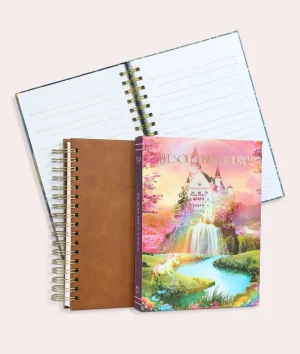
4. Spiral Binding

Spiral binding is one of the most practical workbook binding options when usability is a priority.
A series of holes is punched along one edge of the pages, and a plastic or metal spiral coil is inserted through the holes to hold the pages together.
The major advantage is flexibility. Spiral-bound workbooks can generally open much wider than perfect-bound books and can often be folded back on themselves.
Why Is Spiral Binding Popular for Workbooks?
Workbooks are often designed for writing. Users need enough space to complete exercises, write answers, and take notes.
A spiral-bound workbook can make this process much easier because pages can turn around the coil and remain open on a particular page.
For example, a student can complete an exercise without constantly holding the book open. A trainer can keep a workbook open while presenting information. A user can place the workbook on a desk and work through activities more comfortably.
Advantages of Spiral Binding
Lays flat: One of the biggest benefits is the ability to open the workbook flat.
Can fold back: Many spiral-bound workbooks can be folded backward, reducing the amount of desk space required.
Easy page turning: Pages can be turned smoothly around the spiral.
Excellent for writing: This makes spiral binding particularly suitable for activity-based workbooks.
Functional appearance: Spiral binding clearly communicates that the product is designed for practical use.
Considerations of Spiral Binding
Spiral binding uses physical coils along the edge of the workbook. This can make the finished product slightly different in appearance from a conventional book.
The coil also needs to be considered when designing the page layout. Important text or graphics should not be placed too close to the punched edge.
In addition, very high page counts may require larger coils, which can affect the overall appearance and handling of the workbook.
Common Uses for Spiral-Bound Workbooks
Spiral binding is especially suitable for:
Student workbooks
Teacher guides
Recipe workbooks
Workshop books
Exercise books
Technical training materials
If users need to write extensively in the workbook, spiral binding is often one of the first options worth considering.
5. Wire-O Binding

Wire-O binding is another excellent option when functionality and professional presentation are both important.
Similar to spiral binding, Wire-O uses holes punched along the binding edge. However, instead of a continuous spiral coil, a series of double-loop metal wires secures the pages.
This gives Wire-O-bound workbooks a clean and professional appearance while maintaining excellent functionality.
How Does Wire-O Binding Work?
After printing, the pages and cover are punched with evenly spaced holes. A metal Wire-O element is then inserted through the holes and closed to secure the workbook.
The pages can rotate around the wire, allowing the workbook to open flat.
Advantages of Wire-O Binding
Excellent flat-opening performance: Users can keep the workbook open while writing or reading.
Professional appearance: Wire-O often has a clean, polished appearance suitable for business and educational publications.
Easy page turning: Pages can rotate smoothly around the wire.
Good for workbooks: The binding works particularly well for materials that require frequent writing.
Durable construction: The metal wire provides a sturdy binding solution when properly produced.
Spiral vs. Wire-O Binding
Spiral and Wire-O binding are similar in terms of functionality, but they have different visual characteristics.
Spiral binding uses a continuous coil, while Wire-O uses individual loops of wire. Wire-O often provides a more structured and professional appearance, making it popular for corporate training materials, premium workbooks, and professional manuals.
Spiral binding, on the other hand, can provide a more casual and highly functional appearance.
The right choice depends on the style and purpose of your workbook.
How to Choose the Right Workbook Binding?
Choosing between different workbook binding options does not have to be complicated. Start by considering how the workbook will be used, then evaluate the following factors.
Page Count
Page count is one of the first things to consider.
For relatively thin workbooks, saddle stitch can provide an economical solution. As the page count increases, perfect binding, sewn perfect binding, spiral binding, or Wire-O may become more appropriate.
Keep in mind that the thickness of your paper also affects the final book thickness. A workbook printed on heavier paper can become significantly thicker than one printed on lightweight stock with the same number of pages.
Before selecting a binding method, consider:
Total page count
Paper weight
Number of sections
Final book thickness
If you are unsure which binding works for your page count, we can help evaluate the specifications before production.
Functionality
Think about what readers will actually do with the workbook.
Will they primarily read it?
Will they write answers on individual pages?
Will they need to keep the workbook open during a class?
Will they frequently flip between different sections?
Will they use it for several months?
These questions can make the decision much easier.
For example, if the workbook is primarily a reading and reference document, perfect binding may be appropriate.
If users need to write extensively, spiral or Wire-O binding may provide a better experience.
If the workbook will be used heavily over an extended period, sewn perfect binding may be worth considering.
Budget
Budget is another important consideration.
Saddle stitch is generally one of the most economical choices for thin workbooks. Perfect binding can offer a good balance between professional appearance and cost for thicker publications.
Spiral and Wire-O require additional punching and binding components, while sewn perfect binding involves additional production processes.
Rather than simply choosing the cheapest binding, consider the total value.
A slightly more expensive binding may be worthwhile if it significantly improves usability or extends the life of the workbook.
For large-volume orders, production quantity can also influence the overall unit cost. Discuss your quantity and specifications with us to determine the most cost-effective solution.
Durability
How long does the workbook need to last?
A workbook used once during a short workshop may not require the same construction as a training manual used repeatedly throughout the year.
Consider:
Frequency of use
Expected lifespan
Storage conditions
How often pages will be turned
Whether users will write directly in the workbook
For frequent-use applications, stronger binding options such as sewn perfect binding, spiral, or Wire-O may be worth considering.
Writing and Note-Taking Requirements
Writing space is one of the most important considerations for many workbooks.
If users need to complete exercises directly on the pages, a binding that allows the workbook to remain open can improve the overall experience.
Spiral and Wire-O binding are particularly useful because they can lay flat and make it easier for users to write.
For perfect-bound workbooks, the inner margins should be designed carefully so that important content is not too close to the spine.
Appearance
The binding also contributes to the overall visual identity of the workbook.
Perfect binding offers a conventional book-like appearance and can provide a printable spine when the book is thick enough.
Sewn perfect binding can give the workbook a more premium feel.
Spiral and Wire-O communicate practicality and functionality.
Consider where your workbook will be used and how you want it to be perceived.
A corporate training manual may benefit from a polished perfect-bound or Wire-O appearance, while a classroom activity workbook may prioritize ease of use over a traditional book appearance.
Storage and Shipping
The way your workbooks will be stored and shipped can also affect your decision.
Perfect-bound workbooks stack neatly and provide a conventional book format. Saddle-stitched workbooks are lightweight and economical to ship.
Spiral and Wire-O workbooks have additional binding components that can increase the physical profile of the finished product.
If you are producing thousands of workbooks for distribution, it is worth considering not only the printing cost but also packaging, storage, shipping volume, and handling.
Workbook Binding Comparison
Here is a simple overview of the most common workbook binding options:
| Binding | Best For | Main Advantage | Key Consideration |
| Saddle Stitch | Thin workbooks | Affordable and lightweight | Page count must be a multiple of four |
| Perfect Binding | Medium/thicker workbooks | Professional book-like appearance | Does not lay completely flat |
| Sewn Perfect Binding | Frequently used workbooks | Strong and durable | Higher production cost |
| Spiral Binding | Writing-intensive workbooks | Opens and lays flat | Coil affects appearance and layout |
| Wire-O Binding | Professional workbooks | Flat opening + polished appearance | Wire-o affects appearance and layout |
There is no universally best binding. The right solution depends on your project’s specific requirements.
Common Workbook Applications and Binding Recommendations
Different types of workbooks often benefit from different binding methods.
School Workbooks
School workbooks may include exercises, questions, diagrams, and spaces for students to write answers.
For shorter materials, saddle stitch can be a cost-effective option. For thicker workbooks, perfect binding, spiral, or Wire-O may be more appropriate depending on how the workbook will be used.
Training Workbooks
Corporate and professional training workbooks are often used during workshops, seminars, or employee training programs.
Sewn perfect binding provides a professional appearance, while Wire-O and spiral binding can be useful when participants need to write notes during training sessions.
Teacher Workbooks
Teacher guides and instructor workbooks often contain lesson plans, exercises, answer keys, and reference information.
Since teachers may need to keep the book open while teaching, spiral or Wire-O binding can be particularly practical.
Business Workbooks
Business workbooks may be used for workshops, onboarding, professional development, coaching, or strategic planning.
The choice of binding depends on the brand image and functionality. Perfect binding can provide a polished corporate appearance, while Wire-O can offer greater flexibility.
Activity Workbooks
Activity books often require users to write, draw, solve puzzles, or complete exercises directly on the page.
For this reason, a lay-flat binding can be especially useful.
Preparing Your Files for Workbook Printing
Choosing the right binding is only one part of producing a high-quality workbook.
Your artwork should also be prepared correctly for printing.
For most commercial workbook printing projects, we recommend preparing print-ready files with:
CMYK color mode
300 DPI/PPI images
3 mm / 0.125 inch bleed
Embedded fonts
Proper trim and safe margins
High-resolution graphics
Print-ready PDF files
Binding-specific requirements should also be considered.
For example, spiral and Wire-O workbooks require sufficient space near the binding edge for punching. Important text, numbers, graphics, and writing areas should not be placed too close to the holes.
For perfect-bound workbooks, allow sufficient inner margin so that content remains easy to read near the spine.
For saddle-stitched workbooks, remember that pages are folded and nested, so the page sequence needs to be prepared correctly for imposition.
A professional prepress check can help identify potential problems before printing begins.
Conclusion
The best workbook binding is not necessarily the most expensive or the most durable option. It is the binding method that best matches the way your workbook will be produced, distributed, and used.
For thin and economical workbooks, saddle stitch is a practical choice.
For thicker workbooks that need a traditional book appearance, perfect binding can be an excellent solution.
For projects that require additional durability, sewn perfect binding provides stronger section construction.
For workbooks where users need to write, turn pages, and keep the book open, spiral binding offers excellent functionality.
For professional workbooks that need both a polished appearance and lay-flat usability, Wire-O binding is another strong option.
Before making your final decision, consider page count, functionality, durability, budget, appearance, paper, and how the workbook will be used.
If you are still unsure which of the available workbook binding options is right for your project, our printing specialists can review your specifications and recommend a suitable solution.
Ready to print your workbook? Contact us for a custom quote and professional workbook printing support.